


Mastering the Technical Document Localization Process

Managing technical document localization for European pharmaceutical companies is a complex challenge. Regulatory standards are strict and require flawless compliance in every translated detail. Selecting the right approach delivers both linguistic precision and robust data security, protecting sensitive information while meeting industry demands. This article highlights practical strategies and compliant technical document translation solutions designed to help you ensure accuracy, consistency, and confidentiality in every project.
Table of Contents
Quick Summary
Key Insight | Explanation |
1. Leverage Existing Resources | Inventory translation materials for efficiency and precision in localization projects. |
2. Utilize AI for Initial Drafts | Configure AI tools to generate initial translations, enhancing speed while requiring human oversight for accuracy. |
3. Engage Subject Matter Experts | Involve SMEs to validate technical language and ensure compliance with industry standards in translations. |
4. Implement a Structured Review Process | Create detailed checklists for comprehensive reviews, ensuring all regulatory and linguistic criteria are met. |
5. Ensure Document Security | Adopt multi-layered security protocols to protect sensitive translated documents throughout their lifecycle. |
Step 1: Collect Translation Assets and Compliance Materials
Successfully localizing technical documents requires strategic asset gathering. Your goal is building a comprehensive translation resource that ensures regulatory compliance and linguistic precision.
Start by creating an inventory of existing translation materials. This includes translation memories, glossaries, previous translated documents, and industry specific terminology databases. Organizations often overlook existing resources that can significantly streamline the localization workflow. Leveraging AI powered tools helps align complex technical terminology across different languages and regulatory contexts.
Prioritize gathering compliance specific documents like safety data sheets, product specifications, and regulatory filings. For industries such as pharmaceuticals or chemical manufacturing, these materials must precisely match target market requirements. Pay special attention to legal formatting, technical language nuances, and region specific regulatory standards.
Pro tip: Develop a centralized digital repository for all translation assets to enable quick retrieval and consistent reference across translation projects.
Step 2: Integrate Proprietary AI for Initial Localization
Initiating the localization process with proprietary AI technology streamlines complex translation workflows. Your objective is to leverage advanced machine learning capabilities for generating precise initial draft translations that capture technical nuances.
Begin by configuring the proprietary AI system to understand your specific industry terminology and regulatory context. Artificial intelligence enhances localization by automating initial translation drafts and recognizing intricate language patterns. Upload your previously collected translation memories and terminology databases to train the AI model, ensuring it understands your organization specific language conventions.
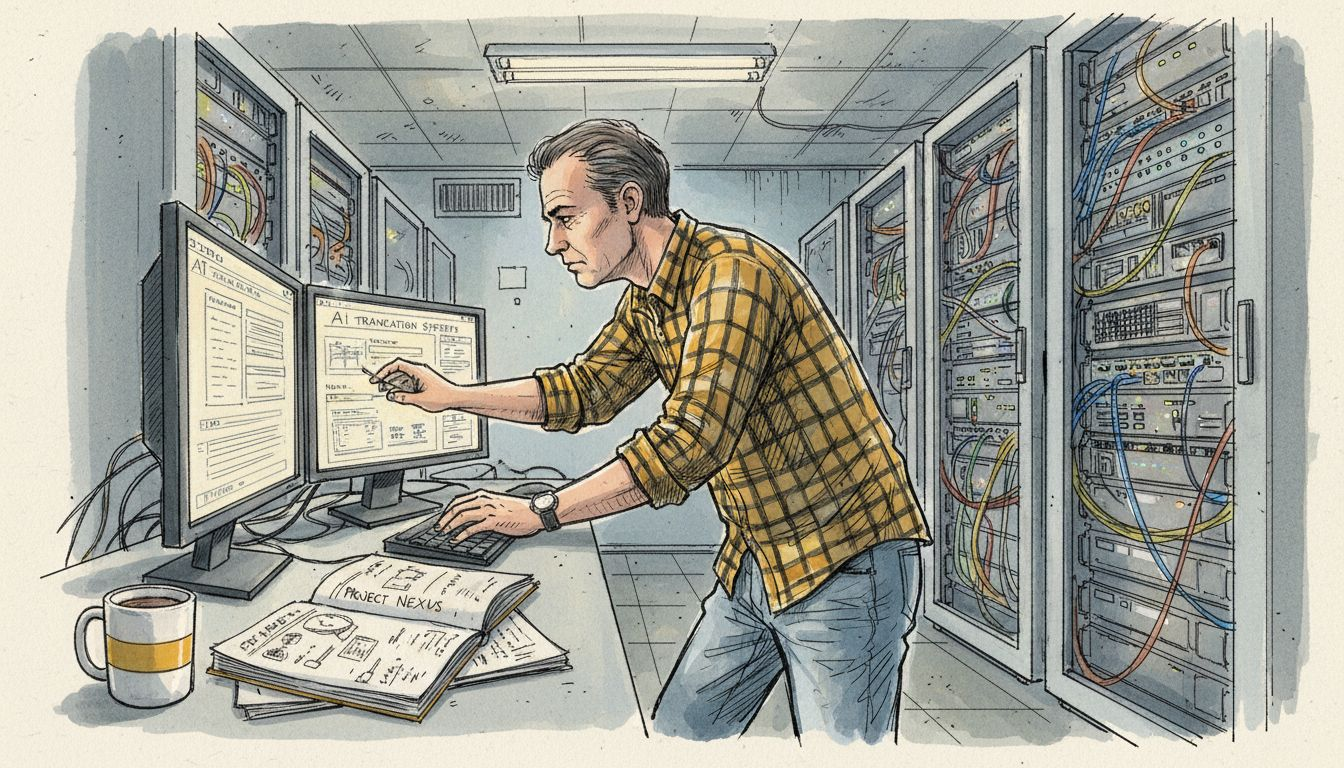
Carefully review the AI generated draft, focusing on technical accuracy and contextual appropriateness. While AI can produce rapid initial translations, human expertise remains critical for verifying complex technical and regulatory language. Implement a structured review process where subject matter experts validate each section of the AI generated content to maintain absolute precision.
Pro tip: Configure your AI translation system with granular industry specific settings to minimize post editing workload and improve initial translation quality.
Step 3: Refine Content with SME Human Oversight
The human expertise phase represents the critical validation checkpoint in your technical document localization workflow. Your primary objective is to leverage subject matter expert (SME) review to guarantee absolute precision and regulatory compliance in translated content.
Human oversight in translation ensures that nuanced technical terminology, regulatory language, and contextual accuracy remain intact. Select SMEs with specialized knowledge in your specific technical domain who understand both the source and target language regulatory environments. These experts will meticulously examine each translated section, verifying technical terminology, checking for contextual accuracy, and confirming that the translation meets stringent industry specific standards.
Establish a structured review workflow where SMEs systematically evaluate the AI generated draft. Create detailed review checklists that cover technical accuracy, regulatory compliance, terminology consistency, and linguistic quality. Implement a collaborative platform that allows seamless communication between AI systems, translators, and subject matter experts to streamline the refinement process.
Here’s how key roles contribute to localization success:
Role | Main Responsibility | Unique Impact |
AI Translation System | Generates initial draft | Speeds up translation |
Subject Matter Expert (SME) | Validates technical content | Ensures regulatory accuracy |
Quality Assurance Specialist | Reviews linguistic and formatting | Maintains document quality |
Compliance Officer | Confirms regulatory adherence | Prevents legal risks |
Pro tip: Develop a comprehensive SME review template with clear evaluation criteria to standardize and accelerate the human oversight process.
Step 4: Validate Accuracy and Regulatory Compliance
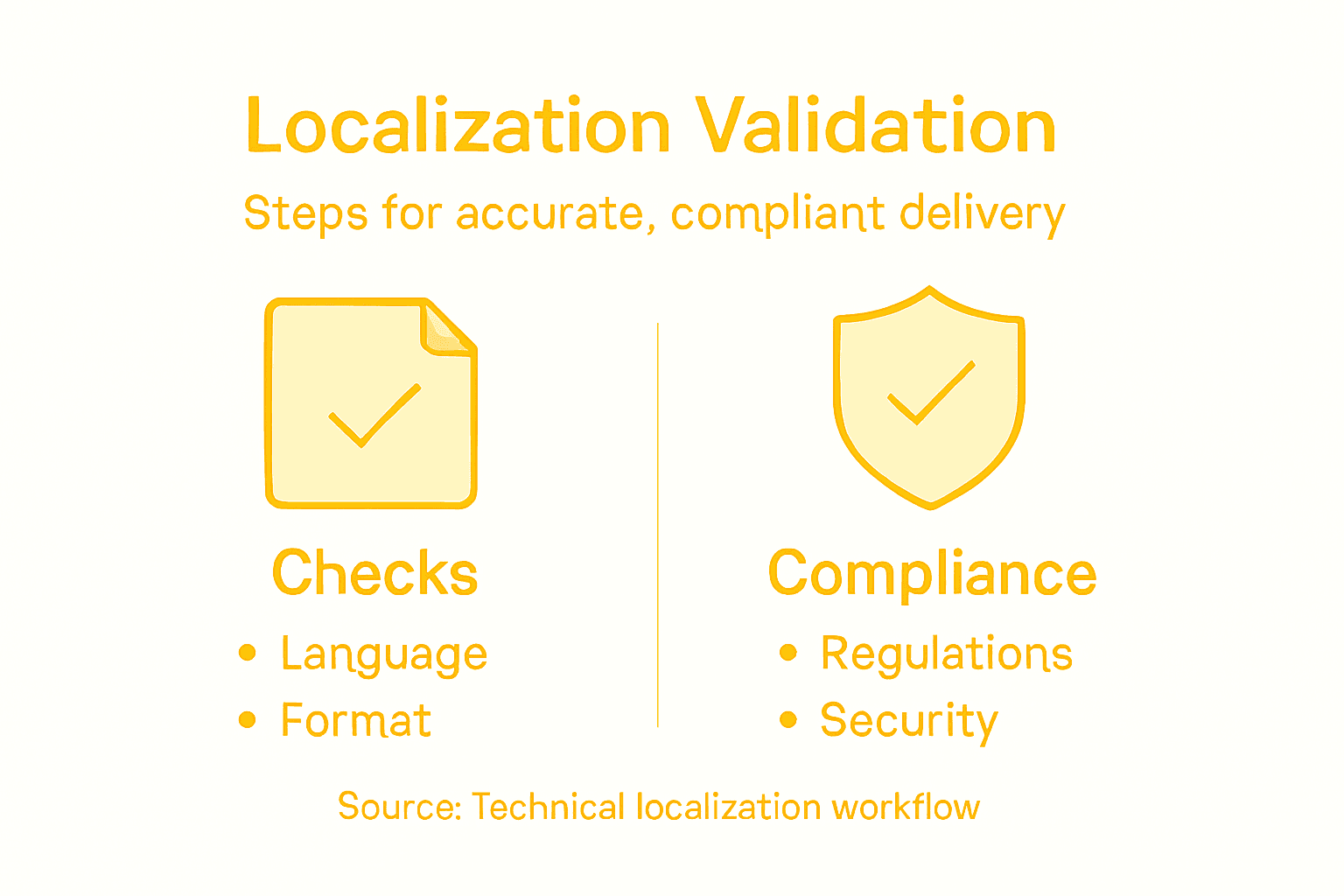
Validating technical document translations requires a meticulous approach that goes beyond basic linguistic accuracy. Your goal is to create a comprehensive validation process that ensures every translated document meets rigorous regulatory and technical standards.
Translation compliance requires strategic validation across multiple dimensions. Develop a multi tiered review process that includes linguistic verification, technical accuracy checks, and regulatory compliance assessments. Engage native speaking subject matter experts who understand both the source language technical nuances and the regulatory landscape of the target market. These specialists will scrutinize each translated document for contextual precision technical terminology alignment and adherence to industry specific regulatory requirements.
Implement a structured quality assurance framework that encompasses comprehensive review protocols. Create detailed checklists that cover linguistic accuracy technical precision regulatory compliance and document formatting. Utilize advanced comparison tools that can track changes between source and translated documents identifying potential discrepancies or mistranslations. Establish a formal sign off process where senior subject matter experts provide final validation before document release.
Pro tip: Create a living compliance validation matrix that evolves with changing regulatory standards and captures unique translation challenges specific to your industry.
Step 5: Deliver Secure Finalized Localized Documents
The final stage of technical document localization demands rigorous security protocols and meticulous document preparation. Your objective is to deliver precisely translated documents that maintain absolute confidentiality and regulatory compliance.
Secure translation services protect sensitive information through comprehensive data protection strategies. Implement a multi layered document verification process that includes digital watermarking, access controlled file sharing, and encrypted transmission channels. Ensure each finalized document receives a unique identification code that tracks its entire translation lifecycle while maintaining complete confidentiality.
Prepare comprehensive documentation packages that include the translated document, original source files, translation memory references, and compliance verification certificates. Organize these materials in a structured format that allows easy reference and future auditing. Conduct a final comprehensive review to confirm that all regulatory requirements have been met and that the document is ready for official submission or distribution.
This table summarizes essential security features for finalized documents:
Security Feature | Purpose | Business Benefit |
Digital Watermarking | Verifies document authenticity | Deters unauthorized copying |
Encrypted Transfer | Secures document transmission | Prevents data breaches |
Access Controls | Restricts document access | Protects sensitive information |
Unique Document ID | Tracks translation lifecycle | Supports audit traceability |
Pro tip: Create a secure digital archive with granular access controls to maintain a traceable record of all translated documents while protecting intellectual property.
Elevate Your Technical Document Localization with AD VERBUM’s AI+HUMAN Precision
Mastering the localization of technical documents requires more than basic translation. The article highlights the critical need for gathering specialized translation assets, applying advanced AI for initial drafts, and ensuring thorough human expert review to meet strict regulatory compliance. If your company struggles with managing complex terminology, safeguarding sensitive data, or delivering perfectly compliant translations on time, you are not alone. AD VERBUM understands these challenges and offers a solution tailored to your exact needs.
With over 25 years of experience and a proprietary LLM-based AI ecosystem hosted entirely on EU servers, AD VERBUM’s AI+HUMAN workflow precisely enforces terminology and preserves context for regulated industries. Unlike public machine translation tools prone to data leakage and inaccuracies, our secure system guarantees zero data exposure and maintains rigorous compliance with GDPR, HIPAA, and industry-specific standards. Our network of 3,500+ subject matter experts ensures that every document is reviewed for technical accuracy and legal conformity before delivery.
Discover how to transform your technical document localization process by integrating your assets with our powerful technology and expert validation. Take the first step toward zero-error, rapid, and fully secure translations with AD VERBUM’s Specialized AI Translation. For tailored guidance and immediate support, contact our team today at https://adverbum.com/contact and experience the future of compliant localization.
Frequently Asked Questions
What are the key assets needed for technical document localization?
To successfully localize technical documents, gather translation memories, glossaries, and previous translations. Start by creating an inventory of these resources to streamline your workflow.
How can I ensure regulatory compliance during the localization process?
Focus on collecting compliance-specific documents such as safety data sheets and product specifications. Review these documents meticulously to ensure they align with the regulations of your target market.
What role do subject matter experts play in document localization?
Subject matter experts (SMEs) validate the accuracy and precision of translated content. Engage SMEs to review AI-generated drafts and ensure terminology aligns with industry standards and regulations.
How can I maintain confidentiality when delivering localized documents?
Implement security measures like encrypted document transfers and access controls. Ensure that each finalized document is digitally watermarked and tracked with a unique identification code to protect sensitive information.
What steps should I take to validate translated documents for accuracy?
Establish a multi-tiered review process that includes linguistic and technical checks. Use detailed checklists to assess each document for compliance and accuracy before final approval and release.
Recommended
