


Optimizing AI+Human Translation Process for Regulated Sectors

More than 80 percent of American organizations now depend on advanced translation workflows to manage critical documentation in regulated industries. In sectors where precision can make or break compliance, the integration of AI and expert oversight has become a necessity. This guide explains the essential steps for crafting a seamless American translation process that unites cutting edge technology with human expertise to deliver consistently accurate results.
Table of Contents
Quick Summary
Key Point | Explanation |
1. Integrate terminology databases | Build a centralized terminology database to ensure consistent translations and reduce errors. |
2. Configure AI for compliance | Establish clear rules for regulatory standards to maintain accuracy in specialized translations. |
3. Execute AI-driven initial pass | Use the AI model to draft translations while preserving technical accuracy and context. |
4. Refine through expert reviews | Have subject matter experts review translations to ensure precision and address any ambiguities. |
5. Validate quality standards | Implement rigorous quality checks and certifications to ensure translation meets industry norms. |
Step 1: Integrate Translation Memories and Terminologies
Successfully integrating translation memories ™ and terminologies is critical for maintaining precision in specialized translation workflows. The goal is to create a consistent linguistic framework that ensures accuracy across all translated content.
Researchers exploring terminology integration strategies highlight the core tasks of management, identification, and translation within neural machine translation systems. Through careful terminology management, organizations can develop robust linguistic resources that significantly enhance translation quality. This process involves systematically capturing and organizing approved terminology from existing documentation, technical glossaries, and industry specific lexicons.
When implementing your integration strategy, focus on creating a centralized terminology database that allows real time updates and cross reference capabilities. Your database should include precise definitions, context of usage, preferred translations, and potential variations for each technical term. By maintaining a dynamic and comprehensive terminology resource, you minimize translation inconsistencies and reduce potential misinterpretations in critical documentation.
Pro tip: Always validate your terminology database with subject matter experts who understand the nuanced language requirements of your specific industry. Their expertise ensures that technical terms are translated with absolute precision.
The next step involves configuring your AI+HUMAN translation workflow to leverage these integrated linguistic assets effectively.
Step 2: Configure Proprietary LLM-Based AI for Compliance
Configuring a proprietary Large Language Model for regulatory compliance requires a strategic approach that ensures absolute precision and adherence to industry specific standards. Why AI+Human Translation becomes critical when working with sensitive documentation in regulated sectors.
Researchers have developed innovative frameworks for aligning AI systems with complex regulatory requirements. These advanced methodologies involve creating machine readable rules that encompass ethical principles, operational safety protocols, and stringent compliance standards. By implementing a framework like ArGen, organizations can develop AI models that demonstrate remarkable domain specific adherence and precision.
The configuration process involves several key steps: first, establish a comprehensive ruleset that defines acceptable language parameters, terminology constraints, and industry specific guidelines. Your proprietary LLM must be trained to recognize and strictly enforce these predefined rules. Specialized multi agent approaches can further optimize performance by synthesizing code from multiple specialized language models, enabling faster and more cost effective compliance optimization.
Pro tip: Continuously validate your LLM configuration against the latest regulatory standards. Compliance is not a one time setup but an ongoing process of refinement and adaptation.
The next stage involves implementing rigorous quality assurance protocols to validate the AI+HUMAN translation workflow.
Step 3: Execute Initial AI-Driven Translation Pass
Executing the initial AI-driven translation pass is a critical phase in the AI+HUMAN translation workflow, where precision and linguistic nuance become paramount. Your proprietary Large Language Model will generate the first comprehensive translation draft leveraging the carefully configured terminology and compliance parameters.

Terminology management research highlights three fundamental tasks during this initial translation stage: management, identification, and translation of specialized content. The AI system must dynamically integrate predefined terminology while maintaining contextual accuracy across complex technical documents. This means your LLM will not just translate words but comprehend the intricate semantic relationships within specialized industry language.
During the initial pass, configure your AI to prioritize exact terminology matches from your integrated translation memory. Pay close attention to domain specific terminology that carries critical regulatory or technical implications. The translation should preserve the original document technical integrity while ensuring linguistic fluency and precision. Your AI will systematically process each segment ensuring consistent terminology usage and adherence to predefined linguistic guidelines.
Pro tip: Always review the AI generated translation with domain specific terminology checklists to verify absolute precision before human expert refinement.
The subsequent stage will involve expert linguistic review and refinement of the initial AI translation pass.
Step 4: Refine Output with Subject Matter Expert Review
Refining the AI generated translation through expert review is a critical phase that ensures absolute precision in specialized translations. Subject matter experts serve as the critical validation layer in the AI+HUMAN translation workflow.
Research highlights the necessity of expert review in domains where translation accuracy carries significant consequences such as legal medical and technical documentation. These specialists bring nuanced domain knowledge that allows them to detect subtle contextual implications that even advanced AI systems might miss. Their review process involves a comprehensive examination of terminology precision semantic accuracy and contextual alignment.
During the expert review phase focus on identifying potential linguistic ambiguities technical inconsistencies and domain specific terminology nuances. Terminology management research emphasizes the importance of dynamic integration where experts can refine and update translation memory resources in real time. This approach transforms the translation from a mechanical conversion to a precise contextually aware communication artifact.
Pro tip: Establish a structured review protocol that allows subject matter experts to not just correct translations but also provide feedback that can be used to continuously train and improve the AI translation model.
The next stage involves final quality assurance and preparing the translated document for delivery.
Step 5: Validate Quality with Rigorous Industry Standards
Validating translation quality requires a comprehensive approach that goes beyond simple linguistic accuracy. Quality certifications serve as the critical benchmark for ensuring absolute precision in regulated sector translations.
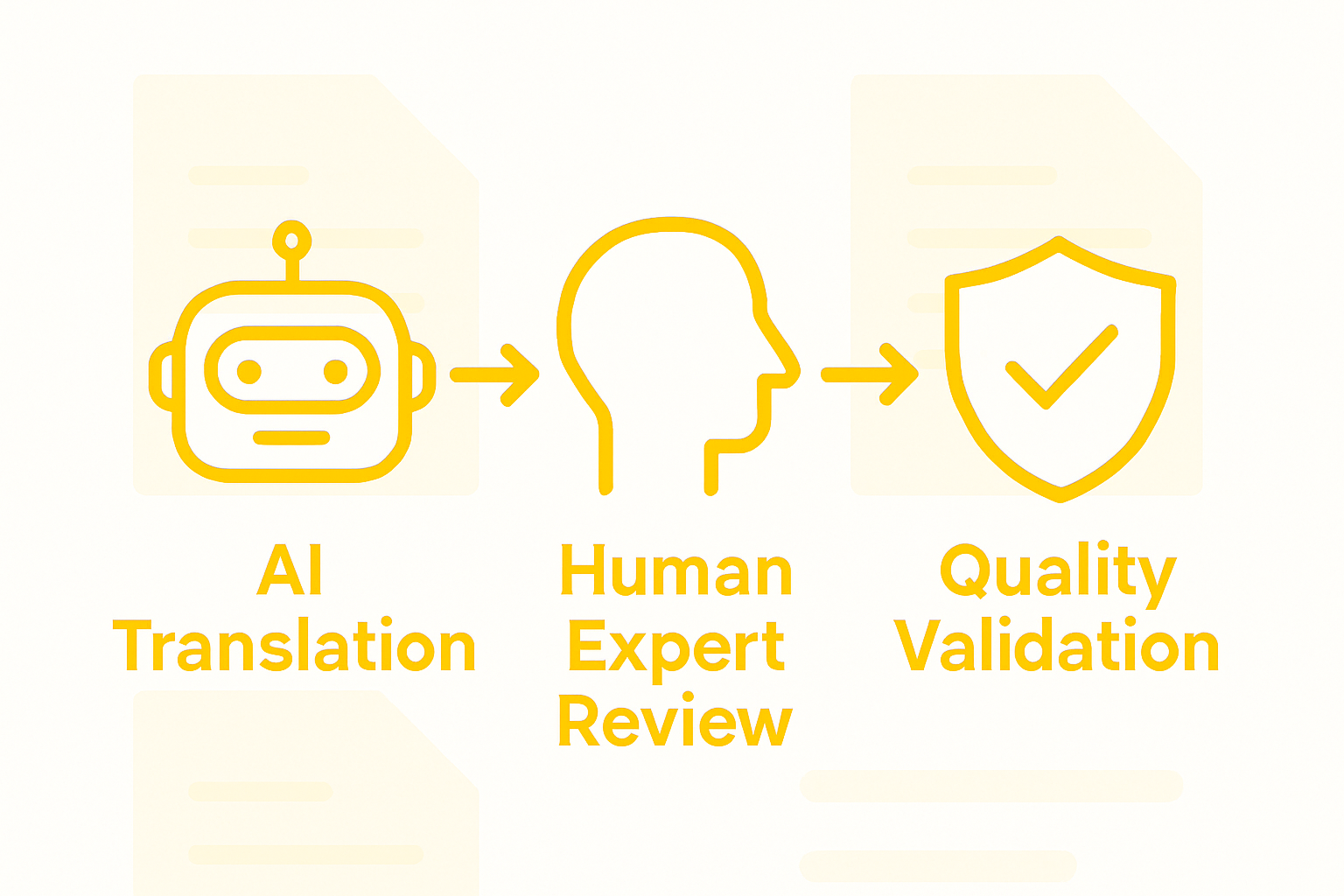
International translation standards provide a systematic framework for evaluating translation quality across complex technical domains. The ISO Technical Committee for Terminology and Language Resources establishes rigorous methodologies that help organizations maintain consistent linguistic standards. This involves a meticulous review process that examines not just linguistic accuracy but also technical precision contextual nuance and regulatory compliance.
Translation memory systems play a crucial role in this validation process by enabling systematic comparison and consistency checks. These advanced tools allow expert reviewers to cross reference current translations against previously validated linguistic assets ensuring that specialized terminology remains consistent across different documents and translation projects. The validation process includes multiple layers of review checking for technical accuracy linguistic fluency and absolute adherence to industry specific terminology guidelines.
Pro tip: Develop a structured quality assessment protocol that includes both automated linguistic checks and human expert review to capture nuanced contextual details that automated systems might miss.
The final stage involves preparing the translated document for delivery and maintaining comprehensive translation records.
Achieve Unmatched Precision and Compliance with AD VERBUM’s AI+HUMAN Translation
The article highlights the critical challenges companies face when translating highly regulated content. Common pain points include maintaining consistency in translation memories and terminologies, ensuring compliance with evolving regulatory standards, and avoiding costly errors from generic machine translation. Key concepts such as translation memory integration, proprietary LLM configuration, and expert review underline the importance of combining advanced AI with human expertise to guarantee precision.
AD VERBUM addresses these challenges through a proprietary AI+HUMAN workflow that integrates your existing translation assets while enforcing strict terminology. Our EU-hosted LLM safeguards your sensitive data with full compliance to GDPR and HIPAA standards. Supported by a network of over 3,500 subject matter experts, we ensure every technical and regulatory nuance is accurately captured to eliminate risk.
Unlock reliable, compliant translations faster than ever before by partnering with AD VERBUM. Discover how our specialized AI+HUMAN translation services protect your business from costly mistakes and deliver precision where it matters most. Take the next step toward secure and expert translation solutions today at AD VERBUM.
Frequently Asked Questions
What is the role of translation memories in the AI+Human translation process?
Translation memories are crucial for maintaining consistency and accuracy in specialized translations. Implement a centralized terminology database to systematize and update your translation memories regularly.
How can I ensure compliance when configuring an AI for sensitive translations?
To ensure compliance, create a comprehensive ruleset that defines acceptable languages and terminology constraints for your AI. Update this ruleset continuously to align with any new regulatory standards, ensuring compliance is an ongoing process.
What steps should I follow to execute an initial AI-driven translation pass?
During the initial AI-driven translation pass, prioritize the integration of predefined specialized terminology to maintain technical integrity. Review the AI-generated draft against a checklist of domain-specific terms to verify precision before moving to expert review.
How do subject matter experts improve the translation quality?
Subject matter experts bring valuable domain knowledge that helps detect subtle contextual implications and terminology nuances in translations. Establish a structured review protocol that allows experts to provide real-time feedback to enhance the AI model further.
What standards should I adhere to for validating translation quality in regulated sectors?
Adhere to international translation standards, focusing on linguistic accuracy and technical precision. Develop a structured quality assessment that includes both automated checks and human reviews to identify any discrepancies within 30 days of the initial translation.
Recommended
