


How to Ensure Translation Accuracy for Regulated Content
Updated: Dec 19, 2025

Most American companies operating in regulated industries know that even a single translation error can trigger major compliance headaches. Accurate, secure multilingual communication is not just a best practice, it is an absolute requirement for legal and industry standards. By refining your translation process with cutting edge tools and expert oversight, you can ensure every document meets the strictest quality, data security, and regulatory demands worldwide.
Table of Contents
Quick Summary
Key Point | Explanation |
1. Consolidate Translation Resources | Conduct an audit to gather TMs and terminology into a centralized repository for efficiency and consistency. |
2. Utilize Proprietary AI for Drafts | Use secure, context-aware AI to generate initial translation drafts that align with regulatory standards and enhance confidentiality. |
3. Engage Subject Matter Experts | Match translation projects with qualified experts to validate accuracy and compliance, ensuring industry-specific precision. |
4. Implement Comprehensive Quality Assurance | Establish a multi-layered QA process that verifies linguistic and regulatory integrity, minimizing risks in translated content. |
Step 1: Integrate Translation Memories and Terminology Assets
Translation memories and terminology assets are foundational tools for maintaining consistent, accurate translations in regulated industries. Your goal in this step is to systematically consolidate and organize these critical linguistic resources to streamline your translation workflow.
Begin by conducting a comprehensive audit of your existing translation memories (TMs) and terminology databases. The European Commission’s multilingual terminology database demonstrates how professional organizations maintain extensive linguistic repositories. Gather all your translation assets from various departments: legal, medical, technical writing teams will likely have unique terminology collections. Consolidate these resources into a centralized, accessible repository that your translation team can efficiently utilize.
As Microsoft recommends for translation memory management, regularly update and refine your linguistic assets. Remove redundant entries, standardize terminology, and ensure alignment with the latest approved glossaries. This ongoing maintenance prevents inconsistencies and reduces translation costs by creating a more precise linguistic foundation for your AI+HUMAN translation process.
Pro Tip: Schedule quarterly reviews of your translation memories to remove outdated segments, validate terminology accuracy, and integrate new approved translations from previous projects.
Step 2: Leverage Proprietary AI for Secure Initial Drafts
In this step, you will harness the power of AD VERBUM’s proprietary AI technology to generate precise, secure initial translation drafts that maintain the highest standards of confidentiality and accuracy for regulated content. The goal is to create a foundational translation that serves as a reliable starting point for human expert refinement.
Initiate the process by uploading your source document into AD VERBUM’s secure AI translation ecosystem. Unlike public neural machine translation tools, our proprietary system is engineered to enforce strict terminology constraints and prevent potential data leakage. Master the AI+Human Translation Process for Compliance by configuring your specific linguistic parameters, including industry specific glossaries, style guides, and compliance requirements. The AI will generate an initial draft that respects your organization’s precise linguistic and regulatory standards.
The key difference in our approach lies in the AI’s contextual understanding and rule enforcement. Our Large Language Model does not simply translate words but comprehends the entire document context, ensuring nuanced and accurate translations that preserve technical precision. After the AI generates the initial draft, your subject matter experts will review and refine the content, creating a seamless AI+HUMAN workflow that dramatically reduces translation time while maintaining absolute accuracy.
Pro Tip: Always validate the AI generated initial draft against your most recent terminology database and compliance guidelines to ensure maximum translation integrity.
This comparison highlights how proprietary AI-driven translation differs from public AI tools:
Criteria | Proprietary AI System | Public Neural MT Tools |
Data Security | Enforced confidentiality | Potential data leakage |
Terminology Control | Strict, customizable | Limited and generic |
Regulatory Compliance | Industry-specific options | Broad focus, less precision |
Contextual Understanding | Domain and document-aware | General, less nuanced |
Step 3: Assign Subject Matter Experts to Validate Content
The validation stage represents the critical human oversight component of your AI+HUMAN translation workflow. Your goal is to leverage specialized linguistic professionals who possess deep technical knowledge in your specific industry to meticulously review and refine the AI generated initial draft.

Begin by matching each translation project with subject matter experts who have precise domain expertise matching the document type. For regulated content like medical device instructions, pharmaceutical research papers, or complex legal documents, select validators with professional credentials directly aligned with the source material. Translation quality checkpoints become essential in regulated sectors to ensure absolute precision. Experts should systematically verify technical terminology, contextual accuracy, and compliance with industry specific regulatory requirements.
AD VERBUM’s approach distinguishes itself by maintaining a rigorous network of 3500+ subject matter experts across specialized domains. These professionals are not merely translators but certified specialists in fields like pharmaceuticals, engineering, legal services, and financial regulations. They understand the nuanced technical language and regulatory constraints specific to their domain, enabling them to catch subtle contextual errors that automated systems might miss. Your subject matter expert will perform a comprehensive validation that goes beyond linguistic accuracy to ensure the translation meets the most stringent industry compliance standards.
Pro Tip: Create a standardized validation checklist with specific criteria for each industry to guide your subject matter experts during the review process.
Step 4: Apply Rigorous Quality Assurance and Compliance Checks
The quality assurance stage represents the final critical barrier between your translated content and potential regulatory risks. Your objective is to implement a multilayered verification process that comprehensively validates the translation across linguistic, technical, and regulatory dimensions.
Begin by establishing a structured QA workflow that goes beyond standard linguistic review. Translation quality checkpoints become crucial for maintaining compliance standards in highly regulated industries. Your quality assurance process should include cross referencing translated content against original source documents, verifying precise technical terminology alignment, and confirming absolute adherence to industry specific regulatory guidelines. Utilize automated comparison tools to detect potential discrepancies in technical language, formatting, and critical informational elements.
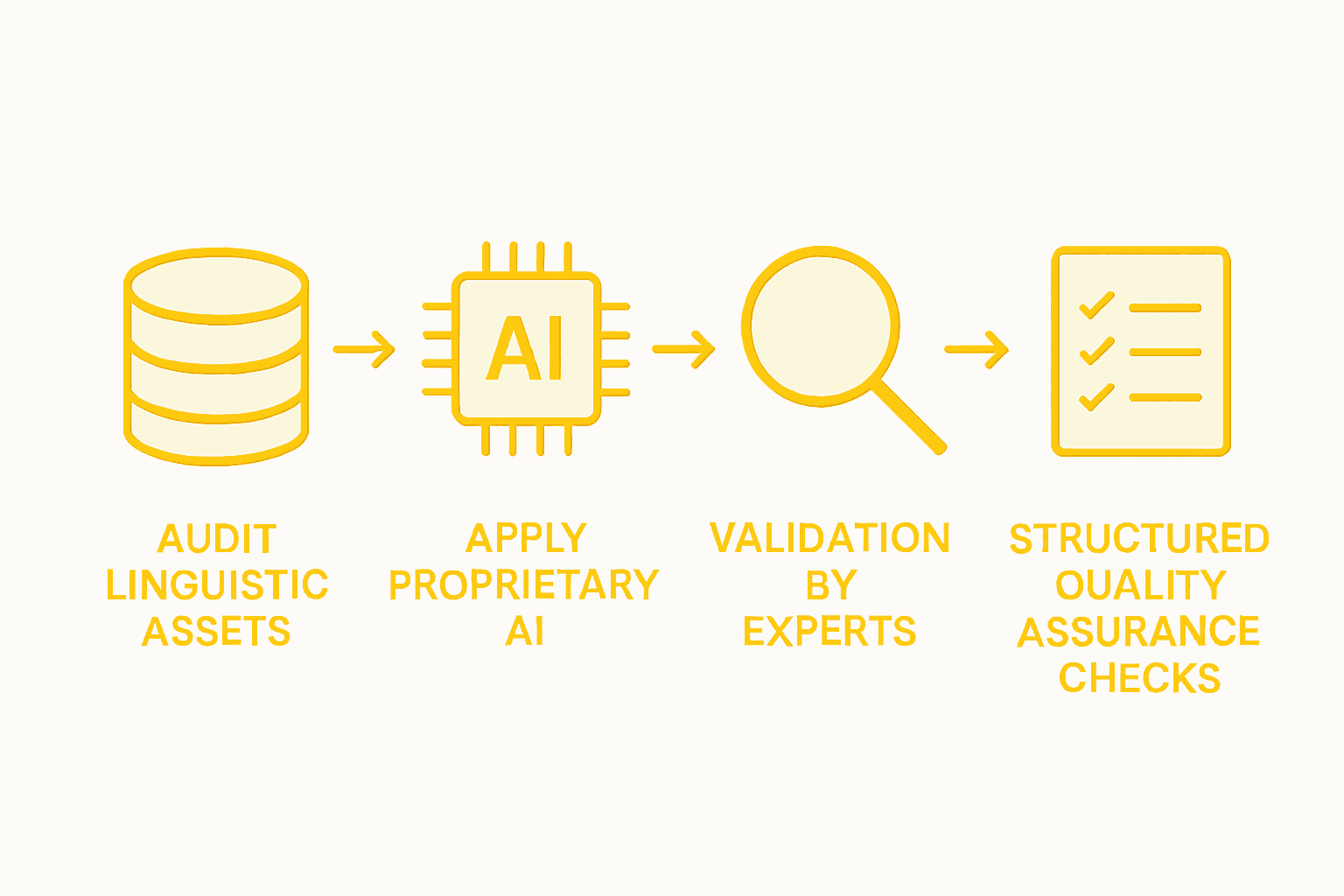
AD VERBUM’s approach distinguishes itself through a comprehensive QA methodology that integrates technological precision with human expertise. Our quality assurance process involves multiple validation layers technical linguists with domain specific certifications perform granular reviews, while our proprietary AI systems simultaneously cross check terminology consistency and detect potential translation anomalies. This dual verification approach ensures that every translated document not only meets linguistic standards but also maintains the exact technical integrity required in regulated sectors like medical device manufacturing, pharmaceutical research, and complex legal documentation.
Pro Tip: Develop a weighted scoring system for your QA process that assigns higher risk scores to critical terminology and technical specifications to prioritize review efficiency.
Here’s a summary of the unique value each step brings to the regulated translation workflow:
Step | Main Focus | Unique Value | Business Impact |
Step 1 | Consolidate TMs & Terminology | Standardizes resources | Ensures consistent terminology |
Step 2 | Proprietary AI Drafts | Context-aware initial translation | Boosts speed, data security |
Step 3 | SME Validation | Domain expertise review | Maximizes technical accuracy |
Step 4 | QA & Compliance Checks | Multi-layered verification | Reduces regulatory risk |
Ensure Absolute Translation Accuracy for Regulated Content with AD VERBUM
Accurate translation of regulated documents is not optional it is essential for compliance, safety, and brand trust. The article “How to Ensure Translation Accuracy for Regulated Content” highlights key challenges such as consolidating translation memories, leveraging AI securely, and engaging specialized subject matter experts. These pain points directly align with AD VERBUM’s proven AI+HUMAN workflow that integrates your Translation Memories and Terminology Assets to enforce strict terminology control and maintain data sovereignty.
Unlike public Neural Machine Translation tools, AD VERBUM’s proprietary large language model offers unmatched data security and precise terminology enforcement, fully contained within an ISO 27001 certified private cloud based in Europe. Our network of 3,500+ certified subject matter experts ensures every translation is validated for technical accuracy and regulatory compliance. This multilayered approach delivers faster turnaround times and minimizes costly errors or regulatory risks.
Take the next step toward flawless, compliant translations by discovering how our specialized AI translation services uniquely solve the challenges discussed in this article. Protect your regulated content with AD VERBUM’s technology-first, secure, and precise AI+HUMAN translation process. Visit us today at AD VERBUM to learn more and request a consultation.
Frequently Asked Questions
How can I integrate translation memories to improve translation accuracy?
Start by conducting a thorough audit of your existing translation memories and terminology databases. Consolidate these resources into a centralized repository that your translation team can easily access and update.
What steps should I take to ensure AI-generated translations are accurate?
To validate AI-generated translations, upload your source documents into a secure translation ecosystem that enforces strict terminology controls. Always check the AI-generated draft against your most recent terminology database and compliance guidelines.
Why is it important to involve subject matter experts in the translation process?
Subject matter experts (SMEs) provide essential validation of the translated content, ensuring it meets technical accuracy and compliance standards. Match each translation project with SMEs who possess relevant domain expertise to enhance the quality of the translations.
How often should I conduct quality assurance checks on translated content?
Establish a structured quality assurance workflow and review your translated content regularly. Implement at least quarterly audits of your translations to verify linguistic accuracy, technical terminology alignment, and compliance with industry standards.
What key elements should be included in a translation validation checklist?
Your validation checklist should cover criteria such as technical terminology accuracy, contextual understanding, and adherence to regulatory guidelines. Customize the checklist based on the specific needs of each industry to enhance validation effectiveness.
Recommended

