Data Security in Translation for Regulated Sectors

Sensitive pharmaceutical and medical device data faces real risks when crossing language borders. For compliance and regulatory affairs managers in Northern European sectors, unauthorized document exposure during translation can jeopardize patient safety and invite severe regulatory penalties. Data security in translation is more than a technical requirement—it is a fundamental layer of protection aligned with strict international standards like GDPR and HIPAA. This article explains how advanced translation protocols and hybrid AI+human workflows safeguard confidential information, enabling you to meet both operational and compliance goals without compromise.
Table of Contents
Key Takeaways
Point | Details |
Importance of Data Security | Data security in translation is crucial for protecting sensitive information, especially in regulated sectors like healthcare and legal services. |
Adoption of Hybrid Translation | AI+Human hybrid translation approaches enhance accuracy and security, making them ideal for compliance-heavy industries. |
Compliance with Regulations | Organizations must align translation processes with strict regulatory standards such as GDPR and HIPAA to ensure data confidentiality and integrity. |
Risk Management Strategies | Implementing comprehensive risk assessments and security audits can help identify vulnerabilities and protect against potential data breaches. |
Defining Data Security in Translation
Data security in translation represents a critical infrastructure for protecting sensitive information during cross-language communication processes. Organizations in regulated sectors like pharmaceuticals, medical devices, and legal services must implement robust strategies to prevent unauthorized data exposure.
At its core, data security in translation involves comprehensive protocols designed to protect confidential documents throughout the translation workflow. These protocols typically encompass multiple layers of protection:
Secure document transmission channels
Encrypted file storage systems
Strict access control mechanisms
Non-disclosure agreements with translation professionals
Compliance with international data protection standards
The process of securing translation data requires a systematic approach that addresses potential vulnerabilities. Protecting sensitive documents during translation involves collaboration with experienced providers who understand complex regulatory requirements and maintain rigorous security protocols.
Regulated sectors face unique challenges in data protection. Healthcare, legal, and financial industries must adhere to strict standards like GDPR, HIPAA, and industry-specific compliance frameworks. This necessitates working with translation partners who can demonstrate:
ISO 27001 information security certification
Robust data handling procedures
Comprehensive risk management strategies
Transparent security documentation
Terminology governance plays a crucial role in maintaining data integrity during translation. By establishing controlled vocabularies and ensuring consistent terminology usage, organizations can minimize potential misinterpretations that might compromise sensitive information.
Pro tip: Conduct regular security audits of your translation workflow to identify and mitigate potential data vulnerability points before they become critical risks.
AI, MT, and Hybrid Translation Differences
Translation technologies have rapidly evolved, presenting organizations with multiple approaches to cross-language communication. Machine translation technologies have transformed from basic rule-based systems to sophisticated neural and generative AI platforms that offer unprecedented linguistic capabilities.
Three primary translation methodologies exist in the current technological landscape:
Machine Translation (MT): Traditional rule-based and statistical translation systems
Neural Machine Translation (NMT): Advanced neural network-driven translation
AI+Human Hybrid Translation: Combining artificial intelligence with expert human review
Traditional machine translation systems rely on predefined linguistic rules and statistical models, which often produce literal translations with limited contextual understanding. Neural machine translation (NMT) represents a significant advancement, utilizing complex neural networks trained on extensive bilingual datasets to generate more nuanced and contextually appropriate translations.
Large language models (LLMs) introduce a new dimension to translation technologies. Unlike traditional MT systems, LLMs excel in understanding complex linguistic contexts and can generate more natural-sounding translations. However, they also present unique challenges in domain-specific accuracy and processing speed.
Hybrid translation approaches have emerged as the most promising solution for regulated sectors. These methods strategically combine AI’s computational power with human linguistic expertise, ensuring:
High-speed initial translation generation
Contextual accuracy through human review
Consistent terminology management
Compliance with industry-specific linguistic requirements
Terminology governance remains crucial in hybrid translation models. By establishing controlled vocabularies and implementing rigorous review processes, organizations can maintain the highest standards of translation precision and reliability.
Pro tip: Implement a structured evaluation framework that assesses translation quality across multiple dimensions, including linguistic accuracy, contextual understanding, and regulatory compliance.
Compliance Demands in Regulated Industries
Regulated industries such as healthcare, pharmaceuticals, medical devices, and legal services operate under stringent data protection and documentation standards that require exceptional precision in translation processes. Compliance requirements for medical translation demand sophisticated approaches to ensure accuracy, confidentiality, and regulatory alignment.
Key compliance challenges in regulated sectors include:
Maintaining strict data confidentiality
Ensuring 100% linguistic and technical accuracy
Preserving document integrity across language translations
Implementing robust audit trails
Meeting international regulatory standards
Regulatory frameworks vary significantly across different industries and geographic regions. Medical device manufacturers must adhere to standards like the Medical Device Regulation (MDR), while pharmaceutical companies navigate complex requirements from agencies such as the FDA, EMA, and international health authorities.
The translation process in regulated industries requires multilayered verification mechanisms. Organizations must implement comprehensive quality assurance protocols that include:
Subject-matter expert review
Terminology consistency checks
Systematic error tracking
Comprehensive documentation of translation processes
Secure data handling protocols
Information security becomes paramount when handling sensitive documentation. Compliance demands extend beyond linguistic accuracy to encompass robust data protection strategies that prevent unauthorized access, maintain audit trails, and ensure complete traceability of every translation project.
Here is a summary of key compliance frameworks for common regulated sectors:
Sector | Primary Standards | Critical Goal |
Healthcare | HIPAA, GDPR | Protect patient privacy |
Pharma | FDA, EMA, MDR | Ensure drug safety |
Legal | GDPR, eDiscovery | Safeguard client data |
Medical Devices | MDR, ISO13485 | Guarantee device accuracy |
Pro tip: Develop a structured compliance checklist that maps translation workflows against specific regulatory requirements for each target jurisdiction and industry sector.
How AI+Human Workflows Protect Data
Collaborative AI+human translation workflows represent a critical strategy for maintaining data security in regulated sectors. These sophisticated processes combine advanced technological capabilities with human expertise to create robust translation environments that prioritize precision, confidentiality, and regulatory compliance.
The AI+human workflow typically involves multiple critical layers of protection:
Automated initial translation generation
Comprehensive human expert review
Systematic terminology verification
Multi-stage quality assurance checks
Rigorous data access controls
Technological oversight plays a crucial role in preventing potential data vulnerabilities. Artificial intelligence systems can rapidly process large volumes of text while human experts provide essential context validation, ensuring that nuanced linguistic and regulatory requirements are meticulously addressed.
Key protective mechanisms in AI+human translation workflows include:
Restricted access to source documents
Encryption of translation assets
Anonymization of sensitive information
Comprehensive audit trail documentation
Secure data handling protocols
The integration of human expertise creates multiple defensive layers against potential data breaches. Subject-matter experts can identify and mitigate risks that automated systems might overlook, particularly in complex regulated industries where precise terminology and contextual accuracy are paramount.

Information governance becomes a critical component of these workflows. By implementing strict controls and leveraging both technological and human capabilities, organizations can create translation processes that meet the most stringent security and compliance requirements.
Pro tip: Develop a comprehensive risk assessment framework that evaluates each stage of the AI+human translation workflow to identify and proactively address potential data security vulnerabilities.
Risks, Liabilities, and Competitive Options
Translation technologies for regulated industries present complex risk landscapes that require sophisticated strategic decision-making. Machine Translation vs AI+HUMAN—Securing Compliance reveals critical distinctions between different technological approaches and their associated potential vulnerabilities.
Primary risk categories in translation technologies include:
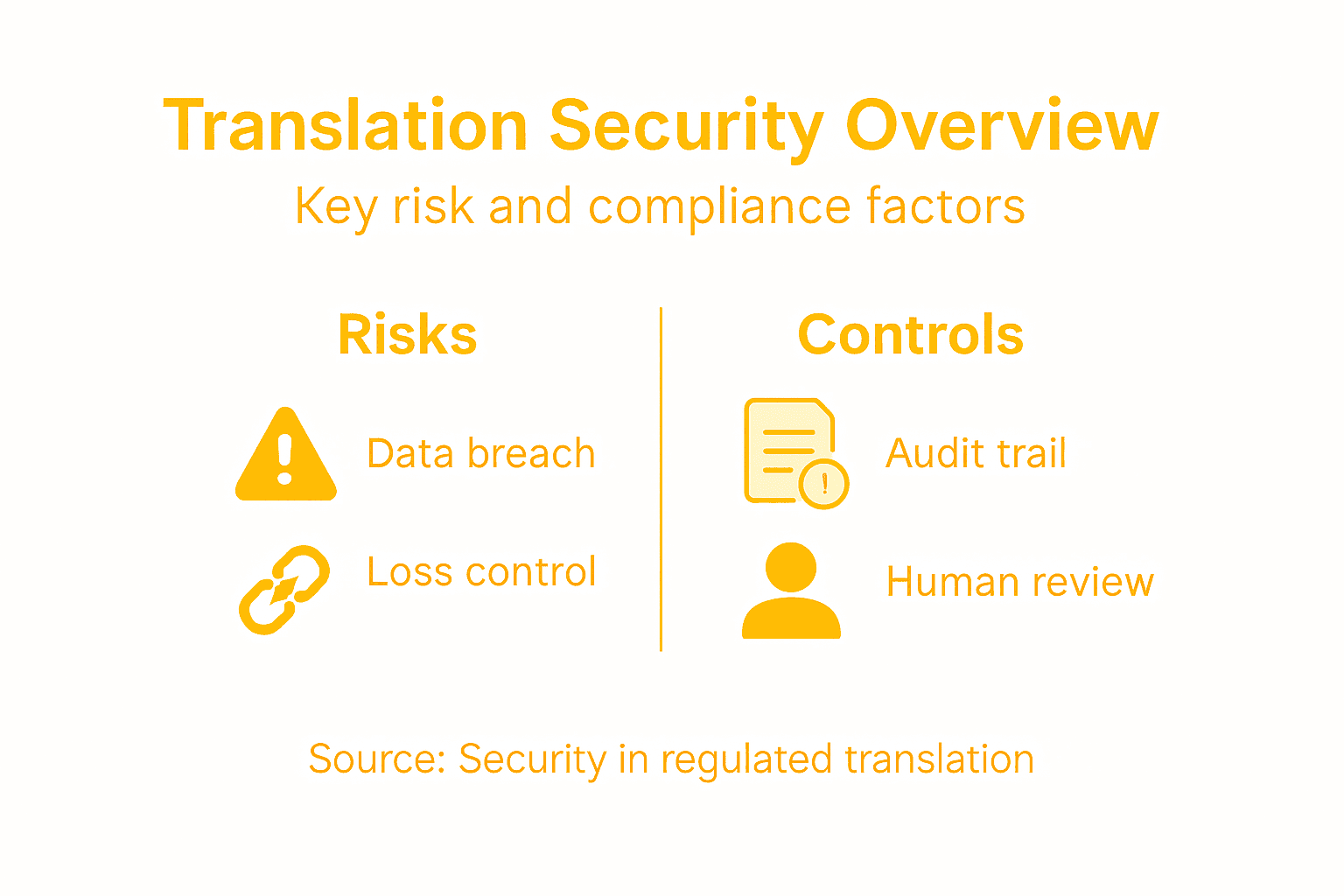
Data breach potential
Terminology inconsistency
Regulatory non-compliance
Intellectual property exposure
Confidentiality violations
Competitive translation options can be categorized across three primary technological approaches:
Traditional Machine Translation (Low Security)
Neural Machine Translation (Moderate Security)
AI+Human Hybrid Translation (High Security)
Each technological approach presents unique liability profiles. Traditional machine translation systems often lack robust security mechanisms, creating significant potential for data compromise. Neural machine translation offers improved contextual understanding but may still introduce unpredictable terminology variations that could create legal and regulatory risks.
Here’s a quick comparison of translation methodologies and their impact on regulated industries:
Methodology | Security Level | Contextual Accuracy | Compliance Risk |
Machine Translation | Low | Limited | High |
Neural Machine Translation | Moderate | Improved | Moderate |
AI+Human Hybrid | High | Excellent | Low |
AI+Human hybrid translation represents the most sophisticated risk mitigation strategy. By integrating technological efficiency with human expert oversight, these workflows provide multiple protective layers that address potential vulnerabilities across linguistic, technical, and regulatory domains.
Liability management requires comprehensive assessment of each translation technology’s specific risk parameters. Organizations must evaluate not just translation accuracy, but also data protection protocols, compliance frameworks, and potential long-term legal implications.
Pro tip: Conduct a comprehensive risk assessment matrix that quantifies potential vulnerabilities across different translation technologies, prioritizing technologies with demonstrable human oversight and robust security protocols.
Secure Your Regulated Sector Translations with AD VERBUM’s AI+Human Expertise
The article highlights the critical challenge of safeguarding sensitive information during translation in regulated industries. Complex compliance demands, terminology governance, and robust data security protocols create pressing pain points for organizations striving to maintain confidentiality and accuracy. AD VERBUM addresses these concerns through its proprietary AI-powered translation ecosystem combined with trusted human oversight, ensuring precision and compliance at every step.
Our specialized AI+HUMAN hybrid translation workflow integrates your Translation Memories and Term Bases first, then applies context-sensitive AI generation followed by meticulous subject-matter expert review and ISO-aligned quality assurance. This multi-layered approach ensures strict terminology control, regulatory conformity, and protection of sensitive data hosted exclusively on secure EU servers with ISO 27001 certification. Whether you require translations for medical devices under MDR or legal documentation governed by GDPR, AD VERBUM’s process provides clarity and confidence where accuracy and security cannot be compromised.
Ready to protect your regulated content with precision and security? Discover how AD VERBUM’s Specialized AI Translation offers faster turnaround times and comprehensive compliance safeguards that traditional or standard machine translation cannot match. Get in touch today to explore tailored solutions for your high-stakes translation needs by visiting Contact AD VERBUM or learn more about AI+Human Hybrid Translation. Don’t wait to secure your sensitive documents — reach out now and partner with a leader in regulatory-aligned language services.
Frequently Asked Questions
What is data security in translation for regulated sectors?
Data security in translation for regulated sectors refers to the comprehensive protocols and strategies designed to protect sensitive information during the translation processes, particularly in industries like healthcare, pharmaceuticals, and legal services.
Why is terminology governance important in translation?
Terminology governance ensures consistent terminology usage, which minimizes misinterpretations and maintains data integrity, especially critical in the translation of sensitive or regulated documents.
How does AI+human hybrid translation enhance data security?
AI+human hybrid translation combines the computational power of artificial intelligence with human expertise to create multiple layers of protection, ensuring both efficiency and compliance with regulatory standards, while addressing potential data vulnerabilities.
What are the key compliance challenges in regulated industries for translation?
Key compliance challenges in regulated industries include maintaining strict data confidentiality, ensuring linguistic and technical accuracy, preserving document integrity, and implementing robust audit trails to meet international regulatory standards.
Recommended