


Best Secure Translation Services – Expert Comparison 2025
- Dec 3, 2025
- 14 min read

Translating complex information across languages takes more than just clever algorithms or skilled linguists. Every detail in a document can hold weight, and the right technology or service can make the difference between a missed deadline and flawless delivery. As businesses grow across borders, demands for accuracy, consistency, and speed have never been higher. Curious about which solutions help teams tackle these challenges and what makes each approach stand out? The answers reveal how cutting edge tools and expert hands can change the way companies communicate with the world.
Table of Contents
Ad Verbum

At a Glance
AD VERBUM combines more than 25 years of industry experience with proprietary AI-driven workflows to deliver fast, accurate translation and localization for regulated industries. Its AI+HUMAN approach lowers translation costs by at least 30% while preserving subject-matter accuracy and cultural nuance. For companies that cannot tolerate linguistic risk—think regulatory filings, clinical materials, and compliance contracts—this service balances speed, quality, and enterprise-grade process controls.
Core Features
AD VERBUM’s core capabilities center on its proprietary AI translation technology paired with a 100% AI+HUMAN workflow. Projects are handled by certified professional translators with subject-matter expertise and governed under international quality and accuracy standards (ISO 17100). The service covers a broad set of industry-specific needs, enabling consistent, technically accurate output across legal, life sciences, finance, and manufacturing documentation.
Pros
Meaningful cost reduction: The combined AI and human process reduces translation costs by at least 30% without compromising quality.
High linguistic quality with cultural nuance: Certified translators with domain experience ensure output reads naturally and preserves intended meaning.
Faster turnaround times: Proprietary AI accelerates first-draft generation so reviewers can focus on technical accuracy and compliance.
Expert human oversight on every project: Subject-matter linguists validate terminology and regulatory requirements, reducing downstream risk.
Standards-based quality assurance: Alignment with ISO 17100 provides a predictable, auditable framework for large, regulated projects.
Who It’s For
This service targets businesses and organizations that require high-quality, accurate, and culturally nuanced translation and localization at scale. Typical users include life sciences teams managing regulatory and patient-facing content, legal departments translating contracts, financial institutions preparing reports, and manufacturing organizations converting technical manuals and specifications for global operations. AD VERBUM is positioned for B2B buyers rather than individual consumers.
Unique Value Proposition
AD VERBUM’s unique strength is the disciplined fusion of proprietary AI and certified human review: the AI produces consistent first drafts at scale while expert linguists enforce terminology, regulatory constraints, and contextual nuance. That combination delivers predictable cost savings and measurable quality gains. Design choices—such as relying on proprietary technology and a B2B-focused model—prioritize repeatable, auditable workflows over consumer-style transparency. Pricing by quote reflects the service’s customization for regulated projects; this is deliberate rather than incidental. For organizations that value controlled processes, terminological fidelity, and documented quality, AD VERBUM offers a specialized, compliance-oriented alternative to generic machine translation.
Real World Use Case
A pharmaceutical company engaged AD VERBUM to translate regulatory filings and clinical communications into multiple target languages. The AI+HUMAN workflow accelerated delivery, enforced approved terminology across documents, and produced translations that met regulatory scrutiny while protecting confidential content.
Pricing
Request a quote (based on project specifics); specific pricing details are not published and are provided after scoping.
Website: https://adverbum.com
RWS
At a Glance
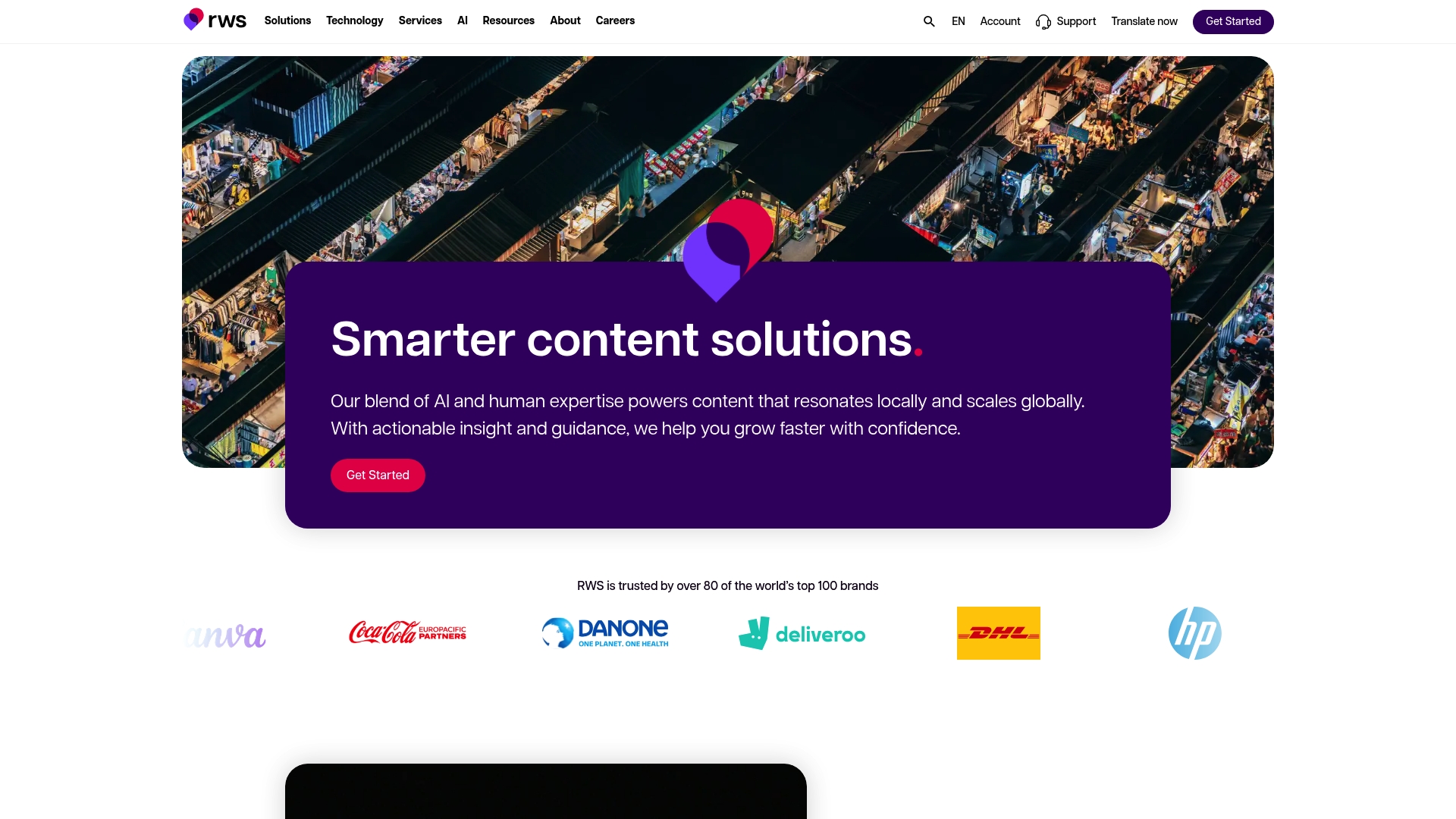
RWS combines AI capabilities with human expertise to deliver end-to-end content solutions aimed at scaling global communications. The platform emphasizes lifecycle management—ideas, data, and content—backed by AI-powered document processing and translation technologies. Trusted by many leading brands, RWS positions itself as a one-stop provider for companies that need both automation and subject-matter oversight. Bottom line: it is strong on scale and innovation, but the public information lacks granular product and pricing specifics you will likely need to evaluate implementation risk.
Core Features
RWS offers a blended AI-and-human approach to content creation and localization, with an AI-powered document upload and processing platform at its core. Capabilities span full lifecycle content workflows—strategy, creation, translation, and distribution—supported by both machine translation and human linguists. The company has invested in IP to advance AI dubbing and other media localization technologies, and it explicitly targets enterprises that require scalable, consistent language assets across markets.
Pros
Enterprise trust and scale: RWS is trusted by over 80 of the world’s top 100 brands, which indicates proven capacity to run large, complex programs at global scale.
Comprehensive content lifecycle: The service covers strategy through execution, reducing vendor handoffs and simplifying governance for cross-functional teams.
Hybrid AI+human model: Combining automated processing with human expertise supports both speed and contextual accuracy for sensitive or technical content.
Advanced translation and media tech: Investments in MT and AI dubbing IP demonstrate a focus on innovation that can accelerate multimedia localization.
Global reach: The platform is positioned to support broad language coverage and multi-market rollouts, which is essential for enterprises expanding internationally.
Cons
Limited public product detail: Specific product capabilities, SLAs, and integration details are not provided in the available content, which makes technical evaluation difficult.
Pricing not disclosed: Without transparent pricing, budgeting and procurement planning require direct vendor engagement and may slow decision cycles.
Potential complexity for new users: The breadth of offerings suggests a steep onboarding curve for organizations that lack centralized content governance or technical integration teams.
Who It’s For
RWS is best suited to mid-size and enterprise organizations that operate across multiple markets and need centralized, scalable content and localization workflows. If you manage complex content lifecycles—marketing assets, product documentation, or multimedia localization—and you require a blend of automation plus human oversight, RWS is positioned to serve your needs.
Unique Value Proposition
RWS’s distinct value lies in combining AI-driven processing and machine translation with human validation and strategic lifecycle management. That pairing aims to deliver both velocity and contextual accuracy while enabling enterprise-scale governance and consistency across brands and markets.
Real World Use Case
A multinational corporation uses RWS’s AI-powered translation and content management platform to localize marketing materials across regions, preserving brand voice while adapting content to local audiences. The solution speeds up throughput and centralizes terminology control to maintain consistency.
Pricing
Pricing is not specified in the provided content, so prospective buyers should request detailed proposals and cost models to understand total cost of ownership, volume discounts, and enterprise licensing options.
Website: https://rws.com
Lionbridge
At a Glance
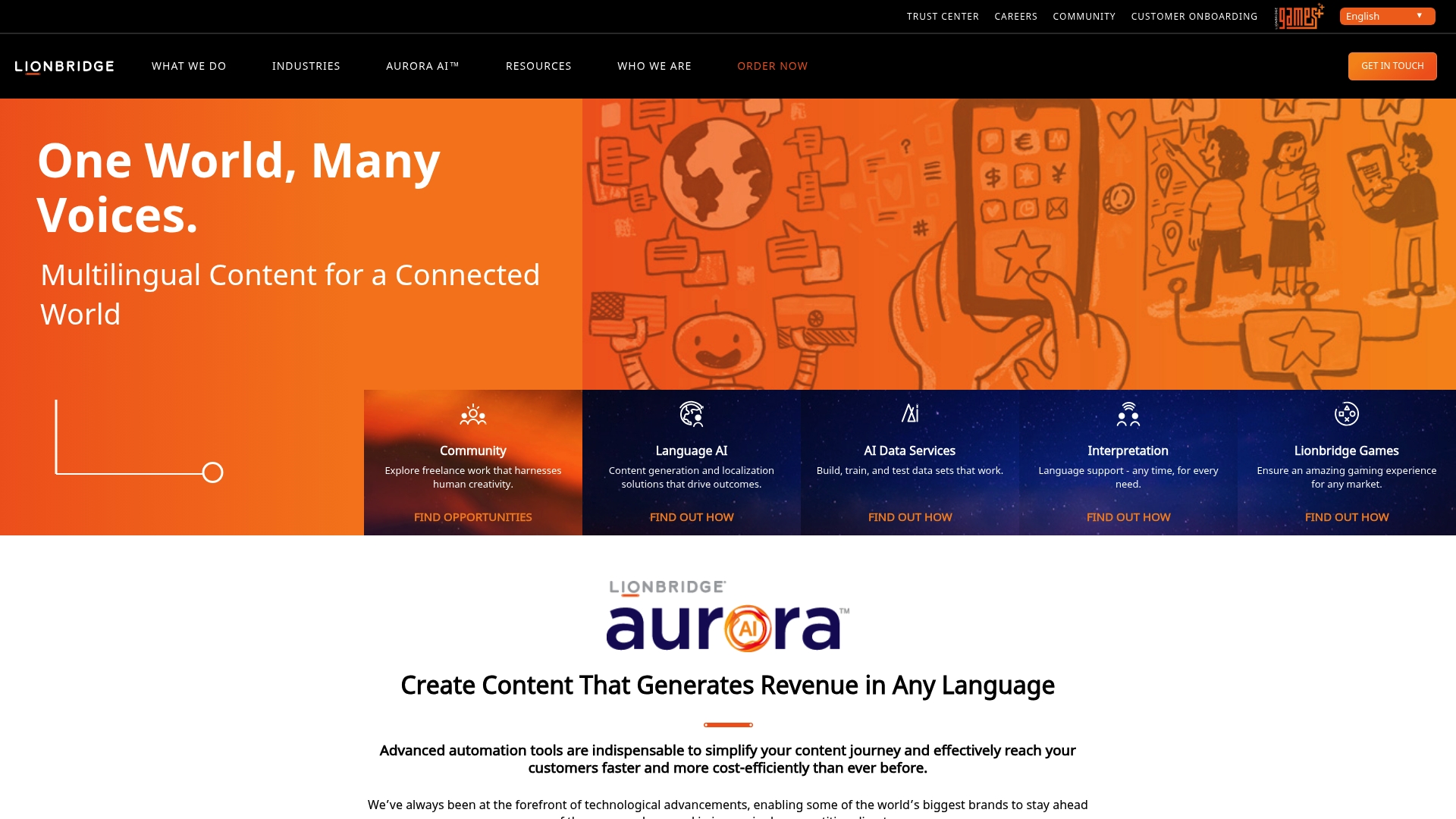
Lionbridge combines advanced AI tooling with human expertise to deliver broad language, localization, content creation, and testing services for global enterprises. The platform emphasizes speed and scalability through generative AI and Aurora AI Studio™, while retaining human oversight across specialized workflows. Good for organizations that need extensive language coverage and integrated QA, though complexity and customization needs can drive higher costs.
Core Features
Lionbridge provides a wide portfolio: generative AI and AI translation services, AI post-editing, content remixing, AI data services, and Aurora AI Studio™ for content management. It supports translation and localization across regulated industries and consumer sectors, plus content creation (technical writing, e-learning, SEO), and robust testing services (functional QA, compatibility, performance, accessibility, and UX/CX). Interpretation is offered 24/7 in over 350 languages, making it a full-spectrum partner for global rollouts.
Pros
AI-driven efficiency and scale: Lionbridge’s generative AI and studio tools accelerate translation and content workflows, reducing time-to-market for multilingual projects.
Proven delivery reliability: The company reports a strong track record of on-time delivery and high customer satisfaction, which matters when timelines and compliance are non-negotiable.
Comprehensive service breadth: The integrated mix of localization, content creation, testing, and interpretation means you can consolidate vendors and maintain consistency across channels.
Security and privacy focus: Lionbridge emphasizes strong data lifecycle protections, which supports compliance needs for regulated content and reduces leakage risk.
Hybrid human-plus-AI expertise: Combining AI with human review preserves technical accuracy and cultural nuance for specialized content.
Cons
Complex service landscape: The breadth of offerings can be difficult to navigate without expert guidance, which may slow onboarding and vendor selection.
Customization and integration effort: Some solutions require substantial tailoring and systems integration, increasing project timelines and management overhead.
Potentially higher costs: Large-scale or highly customized engagements can be expensive, which may deter smaller teams or pilots.
Who It’s For
Lionbridge is aimed at enterprise teams that require end-to-end language and localization capabilities—especially heads of localization, compliance officers, and product teams in life sciences, healthcare, finance, gaming, and technology. If you need broad language coverage, integrated QA testing, and 24/7 interpretation support, Lionbridge fits well.
Unique Value Proposition
Lionbridge’s unique strength is its combination of scalable AI tooling (Aurora AI Studio™) with a full suite of human-centered services across content creation and testing. That combination lets you move fast without sacrificing regulatory or technical precision.
Real World Use Case
A sports and apparel brand uses Lionbridge’s AI-powered localization to produce multilingual marketing campaigns quickly while ensuring brand consistency. Lionbridge also runs QA testing on localized assets to verify functionality and accessibility across markets, enabling rapid global launches.
Pricing
Pricing is custom and based on scope, services, and levels of customization, and is not specified on the website. Expect enterprise-level commercial models with tiered or project-based fees.
Website: https://lionbridge.com
Argos Multilingual
At a Glance
Argos Multilingual delivers a broad suite of multilingual content, translation, and localization services that blend human expertise with AI support. The provider emphasizes industry-specific accuracy across life sciences, medical, healthcare, manufacturing, retail, finance, and corporate communications. Its global footprint and enterprise AI localization capabilities make it a credible option for organizations that need scale and domain compliance. Expect strong quality controls, but plan for a consultative onboarding process to define scope and pricing.
Core Features
Argos Multilingual focuses on end-to-end language solutions: translation and localization, content creation and optimization, plus multimedia services for audio and video assets. The company pairs AI-assisted evaluation with human oversight to own language quality and provide measurable evaluation. Enterprise AI localization solutions address large-scale content pipelines, while multilingual content capabilities cover regional variants and cultural adaptation. Together, these features support technical documentation, regulated content, and marketing assets with an emphasis on consistency and compliance.
Pros
Comprehensive industry-specific expertise: Argos Multilingual demonstrates capability across regulated and commercial sectors, which reduces risk when dealing with specialized terminology.
Combines AI and human review for quality and efficiency: The hybrid approach speeds throughput while preserving human validation for context-sensitive content.
Global presence with multiple offices: Local teams enable closer collaboration, faster response times, and cultural nuance in target markets.
Offers enterprise AI localization solutions: Scalable AI tooling supports large content volumes and integrates with existing content workflows.
Diverse language services including life sciences, legal, technical, financial: A broad service mix lowers vendor fragmentation for organizations with varied content needs.
Cons
Specific pricing details are not provided on the website, which forces organizations to request custom quotes and can slow procurement.
Potential complexity in service options might require detailed consultation for customized solutions, so expect additional planning time before projects start.
Who It’s For
Argos Multilingual fits organizations that must balance volume, specialization, and regulatory sensitivity—think global product teams, regulatory affairs, and marketing organizations in healthcare, life sciences, manufacturing, and finance. If you manage multilingual documentation, multimedia assets, or enterprise content pipelines and need a partner that enforces terminology and quality, this vendor is worth evaluating.
Unique Value Proposition
Argos Multilingual’s unique value lies in combining AI-assisted quality evaluation with human language ownership across industry verticals. That dual approach helps maintain consistency at scale while keeping subject-matter oversight for high-stakes content. The vendor positions itself as a single provider for translation, localization, and multimedia adaptation, reducing handoffs and versioning errors.
Real World Use Case
A multinational corporation uses Argos Multilingual’s AI-powered translation platform to update product documentation across dozens of languages. The platform enforces glossary terms, routes content through subject-matter reviewers, and delivers compliant, culturally adapted documentation on an accelerated schedule—ensuring regulatory alignment and consistent brand voice globally.
Pricing
Pricing is not specified on the website and appears to require a custom quote based on scope, volume, and service mix. Expect a consultative pricing model for enterprise engagements.
Website: https://argosmultilingual.com
LanguageWire
At a Glance
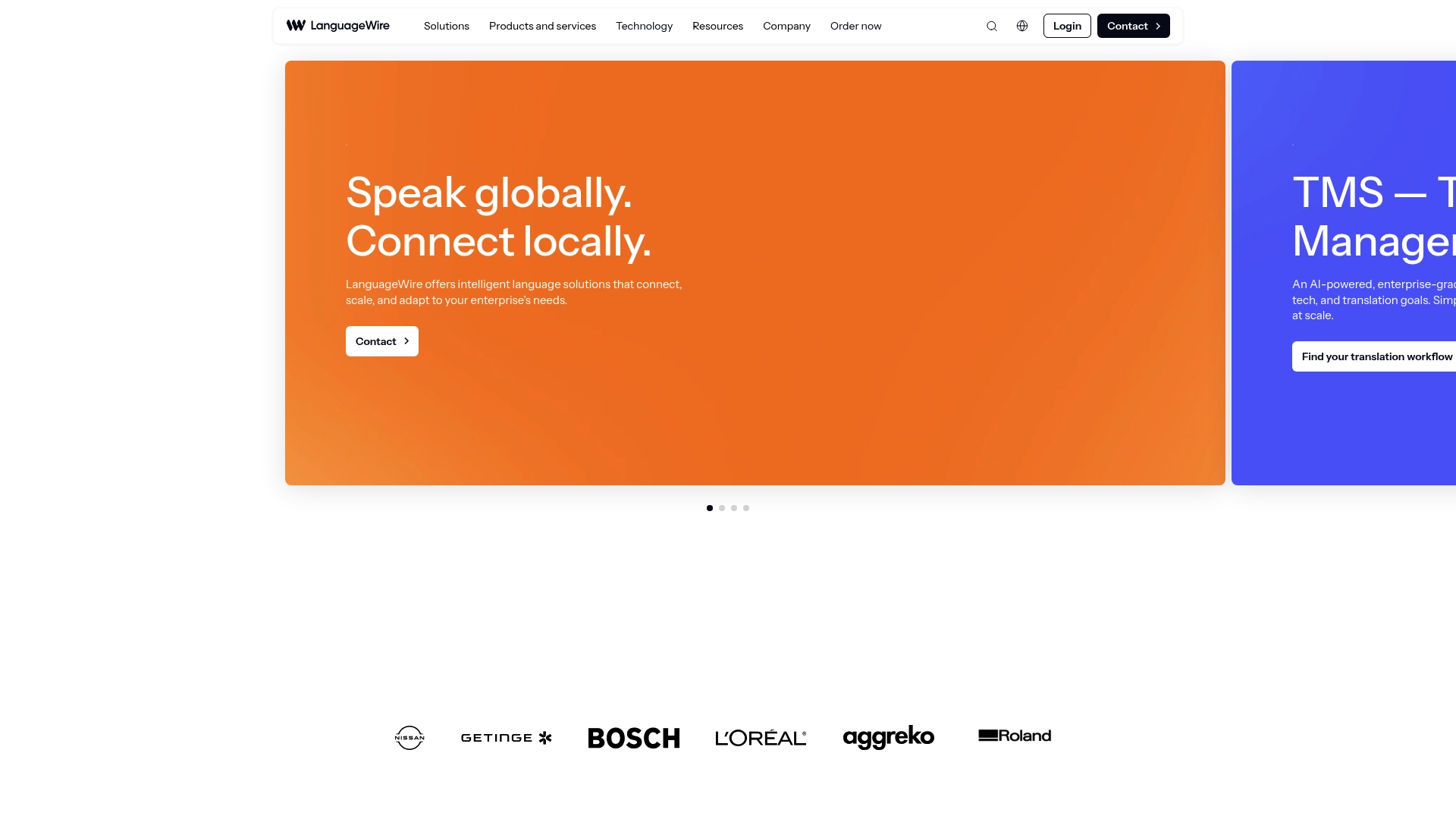
LanguageWire provides a comprehensive enterprise-grade localization platform designed to connect, scale, and adapt to complex multilingual workflows. Its combination of a translation management system, AI-powered automation, and expert review tools makes it suitable for organizations that need operational control across content types. Expect strong integration capabilities and multimedia support, though getting full value may require dedicated configuration and training.
Core Features
LanguageWire’s core capabilities center on a Translation Management System (TMS) augmented by AI-powered automation and machine translation. The platform supports expert review and validation tools, multimedia localization (subtitles, voiceover, AI dubbing), and e-learning localization with voiceover and subtitling integrations. It also emphasizes technical documentation at scale, content automation via connectors for CMS, PIM, and DAM systems, and live interpreting services for hybrid and remote settings.
Pros
Flexible, modular architecture: The platform’s modular design lets enterprises pick features that align with existing workflows, reducing disruption during rollout.
Strong integration ecosystem: Native connectors for major CMS and marketing platforms simplify content flow and reduce manual handoffs.
Balanced AI and human oversight: Combining AI automation with expert review helps increase throughput while maintaining quality for technical and regulated content.
Enterprise-grade security and compliance: LanguageWire describes security-focused deployment and controls appropriate for sensitive enterprise content.
Global language and industry coverage: A broad team and extensive language support make it viable for multinational campaigns and specialized sectors.
Cons
Complexity requires training: The platform’s breadth means teams often need dedicated onboarding and process design to use advanced capabilities effectively.
Pricing is opaque: Public pricing isn’t provided, so procurement requires consultation to obtain a custom quote.
Customization may vary by scale: The level of tailoring available can depend on enterprise size and contract terms, which may limit smaller teams.
Who It’s For
LanguageWire is aimed at large enterprises and global teams that need scalable, secure multilingual content solutions across marketing, technical documentation, e-learning, and multimedia. If you manage distributed content pipelines, require tight CMS or PIM integration, and must deliver consistent branding and compliance across markets, LanguageWire is a practical choice.
Unique Value Proposition
LanguageWire packages a full TMS with AI-driven automation and explicit multimedia/e-learning support, paired with expert validation workflows. Its strength lies in offering a unified environment for diverse content types—text, audio, and video—so teams can centralize localization without stitching together multiple point solutions.
Real World Use Case
A multinational organization uses LanguageWire to centralize translation projects, connect the platform to its CMS, and automate workflow steps such as asset routing and QA checks. This reduces cycle time for campaigns, ensures consistent terminology across markets, and scales multimedia localization for product launches and training.
Pricing
Pricing is not listed publicly; LanguageWire provides custom quotes on request based on scope, integrations, and scale.
Website: https://languagewire.com
Smartling
At a Glance
Smartling is an all-in-one translation orchestration platform built to manage, automate, and scale enterprise localization programs. It combines AI-powered translation with human review, quality assurance, and extensive integrations to keep content flowing from source systems to global channels. If you need centralized control and visibility across many content types, Smartling delivers—though its breadth can feel heavy for small teams. Can it handle enterprise scale? Yes—but expect a learning curve for advanced customization.
Core Features
Smartling’s core capabilities center on translation management and automation: a translation management system that automates handoffs and workflows; connectors to 50+ software platforms for continuous content integration; AI-powered translation that blends LLMs and machine translation engines with human review; visual context and transcreation tools for creative copy; and real-time analytics and dashboards that let you monitor throughput and quality. These elements are designed to reduce manual processes and centralize terminology and QA across distributed teams and file types.
Pros
Seamless integrations with various platforms and tools: Smartling connects to more than 50 systems, which minimizes manual exports and keeps source content synchronized with translation workflows.
Advanced AI and ML capabilities for efficient translation workflows: The platform leverages LLMs and MT engines to accelerate initial drafts while enabling higher-level review and correction.
Robust quality assurance features: Built-in QA and visual context tools reduce the risk of layout or context errors in product copy and documentation.
Support for a wide range of content formats and file types: Smartling accepts diverse inputs, helping teams centralize localization for websites, apps, and technical documents.
Dedicated enterprise-level support and services: Enterprise customers receive tailored onboarding and ongoing services to manage scale and compliance requirements.
Cons
Complexity might be overwhelming for smaller teams or basic needs: The platform’s capabilities can introduce administrative overhead and require governance that small teams may not want to manage.
Pricing details are not explicitly provided, which could impact decision-making for smaller organizations or those with limited budgets: Lack of transparent list pricing makes cost comparison and budgeting more difficult.
Requires some level of technical expertise for advanced integrations and customization: Teams should expect to invest in engineering or vendor-supported implementation for full connector and automation use.
Who It’s For
Smartling suits large enterprises and organizations with significant, ongoing localization needs that require robust automation, deep integrations, and quality controls. If your operation publishes frequent updates across web platforms, mobile apps, and technical documentation and you need central visibility and governance, Smartling aligns with those demands.
Unique Value Proposition
Smartling’s unique value is orchestration: it unifies machine translation, human review, visual context, and analytics into a single platform that integrates directly with source systems. That consolidation reduces handoffs, preserves terminology, and provides measurable performance data across localization pipelines.
Real World Use Case
A practical example: ClassPass automated content localization with Smartling and improved translation efficiency by 70%, saving over 1,000 hours annually and cutting costs through automated workflows and tighter QA loops.
Pricing
Smartling is offered as a tiered SaaS platform with a core plan and an enterprise plan, but specific pricing details are not publicly listed and require vendor consultation for a tailored quote.
Website: https://smartling.com
Translation and Localization Tools Comparison
This table provides a comprehensive comparison of leading translation and localization services, detailing their core features, pros, cons, pricing, and ideal users.
Product | Core Features | Pros | Cons | Pricing |
AD VERBUM | AI+Human workflow, subject-matter expertise, ISO standards | 30% cost reduction, high linguistic quality, faster turnaround | B2B focus, custom quote required | By quote |
RWS | Full lifecycle management, AI translation, human oversight | Enterprise trust, comprehensive content workflows, global reach | Limited product detail, undisclosed pricing | Request proposal |
Lionbridge | Aurora AI Studio™, extensive language services, QA testing | AI-driven efficiency, proven reliability, comprehensive service breadth | Complex service landscape, potentially high costs | By scope |
Argos Multilingual | AI-assisted evaluation, multimedia services, industry-specific expertise | Combines AI and human review, global presence, enterprise AI solutions | Pricing not provided, complexity in options | Custom quote |
LanguageWire | Translation Management System, AI automation, multimedia localization | Flexible architecture, strong integration, enterprise security | Requires training, opaque pricing | Custom quote |
Smartling | Translation orchestration, automation, visual context tools | Seamless integrations, advanced AI/ML capabilities, robust QA features | Complexity for small teams, pricing details not explicit | Tiered SaaS plan |
Secure Your High-Stakes Translations with AD VERBUM’s AI+HUMAN Expertise
When accuracy, data security, and regulatory compliance are non-negotiable, your translation service must rise to the challenge. The article highlights the pitfalls of generic machine translation that can expose sensitive information or produce critical errors. This is a common risk for companies in life sciences, legal, finance, and manufacturing sectors that demand precise terminology enforcement and strict data sovereignty.
AD VERBUM offers a proprietary LLM-based AI platform backed by a 100% AI+HUMAN workflow. Unlike public cloud ML tools, our secure EU-hosted environment guarantees zero data leakage while rigorously enforcing your approved glossaries. Our subject matter expert linguists validate every document to ensure contextual and regulatory accuracy. This makes us the safest choice for complex, regulated content where mistakes can have serious consequences.
Discover how our technology-first approach delivers not only speed but the highest standards of security and quality. Elevate your translation and localization initiatives with AD VERBUM’s specialized AI translation service tailored for regulated industries. Visit https://adverbum.com to request a custom consultation and protect your mission-critical content today.
Frequently Asked Questions
What factors should I consider when choosing secure translation services?
Choosing secure translation services requires evaluating factors such as data security protocols, industry certifications, and translator expertise. Assess their ability to protect sensitive information, especially for regulated industries. Compare potential providers by reviewing their security measures and seeking recommendations.
How can I ensure my documents remain confidential during translation?
To ensure document confidentiality during translation, select services that employ stringent data protection measures including encryption and secure file handling. Confirm that the provider has a Non-Disclosure Agreement (NDA) in place and inquire about their data storage and access policies.
Are there any specific industries that require more secure translation services?
Yes, industries such as life sciences, legal, and finance commonly require more secure translation services due to the sensitivity of their content. Focus on providers experienced in these sectors, as they often have the necessary compliance measures in place to handle sensitive information properly.
How are turnaround times impacted when using secure translation services?
Turnaround times may be slightly longer when using secure translation services, as added security measures require further review and validation. However, most reputable providers can still maintain efficiency by utilizing AI alongside human expertise, often delivering results within standard project timelines.
What steps can I take to evaluate the quality of a secure translation service?
To evaluate the quality of a secure translation service, request samples of previous work and inquire about their quality assurance processes. Consider conducting a pilot project to assess their translation accuracy and security protocols before committing to larger engagements.
How much should I expect to pay for secure translation services?
Costs for secure translation services vary widely based on factors like document complexity, language pairs, and industry requirements. Prepare for pricing that may be 20-30% higher than standard translation services due to the additional security and compliance measures involved.
Recommended
