


Industry Standards in Technical Translation: Ensuring Compliance and Precision

Most American companies know a single mistranslation can lead to costly errors or even legal trouble in highly regulated industries. The demand for technical translation that meets strict international standards is greater than ever, especially when over 80 percent of global organizations rely on multilingual documentation for compliance and safety. Understanding what defines industry standards in technical translation can help ensure that every document retains its precision, security, and professional value across borders.
Table of Contents
Key Takeaways
Point | Details |
Importance of Industry Standards | Adherence to ISO standards like ISO 17100:2015 ensures accuracy and reliability in technical translations across specialized sectors. |
AI+Human Workflows | The integration of AI with human expertise enhances translation quality by combining speed and contextual understanding. |
Terminology Consistency | Effective terminology management is crucial for maintaining precision and preventing ambiguity in high-stakes translations. |
Data Security Protocols | Implementing stringent data protection measures is vital for translating sensitive documents, ensuring compliance and confidentiality. |
Defining Industry Standards in Technical Translation
Technical translation requires precision, consistency, and strict adherence to global quality benchmarks. Industry standards serve as the foundational framework that ensures translations maintain accuracy, reliability, and compliance across highly specialized sectors like medical, legal, and technical domains. Professional translation standards go far beyond mere linguistic conversion, establishing rigorous protocols that protect critical information integrity.
At the core of these standards lies the ISO 17100:2015 specification, which defines comprehensive requirements for translation service providers. This international standard establishes core processes, resource management protocols, and quality assurance mechanisms that translation organizations must implement. By mandating specific guidelines for translator qualifications, workflow documentation, and project management, ISO 17100 creates a universal benchmark for translation quality and professionalism.
Key elements of technical translation standards typically encompass multiple critical dimensions:
Linguistic Competence: Translators must demonstrate advanced subject matter expertise in the specific domain
Technical Terminology Management: Precise maintenance of specialized glossaries and terminology databases
Quality Assurance Protocols: Systematic review processes including multiple levels of editing and verification
Confidentiality and Data Security: Robust information protection mechanisms aligned with international security standards
Additionally, the ISO 20539:2023 standard provides crucial definitional clarity by establishing standardized vocabulary for translation, interpreting, and related technological processes. This framework ensures that technical translation practitioners operate with consistent terminology and shared understanding across different languages and professional contexts. By creating these structured guidelines, AD VERBUM and other leading translation providers can deliver translations that are not just linguistically accurate, but technically precise and professionally validated.
Types of Standards: ISO, Regulatory, In-House
Technical translation standards encompass multiple layers of compliance, ranging from internationally recognized frameworks to industry-specific regulatory requirements and specialized organizational protocols. These standards serve as critical guardrails ensuring translation accuracy, consistency, and professional integrity across complex professional domains.
International standards like the ISO 11669:2024 framework provide comprehensive guidance for translation project specifications, establishing universal benchmarks that apply across commercial and government sectors. These standardized protocols outline detailed requirements for project management, quality control, and procedural consistency, enabling translation providers to maintain predictable and reliable service delivery.
Three primary standard categories define the translation quality landscape:
International Standards (ISO)
Globally recognized frameworks
Universally applicable across industries
Establish baseline quality and procedural expectations
Regulatory Standards
Industry-specific compliance requirements
Mandatory in highly regulated sectors
Typically more stringent than general ISO guidelines
In-House Standards
Organization-specific translation protocols
Tailored to unique technological and operational needs
Often build upon international and regulatory frameworks
Additionally, the ISO/DIS 18968 standard offers critical recommendations for producing and evaluating technical texts intended for translation, addressing intricate requirements at the text production and translation interface. AD VERBUM leverages these multifaceted standards through its AI+HUMAN workflow, ensuring that translations not only meet but exceed the most rigorous professional benchmarks across specialized technical domains.
How AI+Human Workflows Ensure Quality and Safety
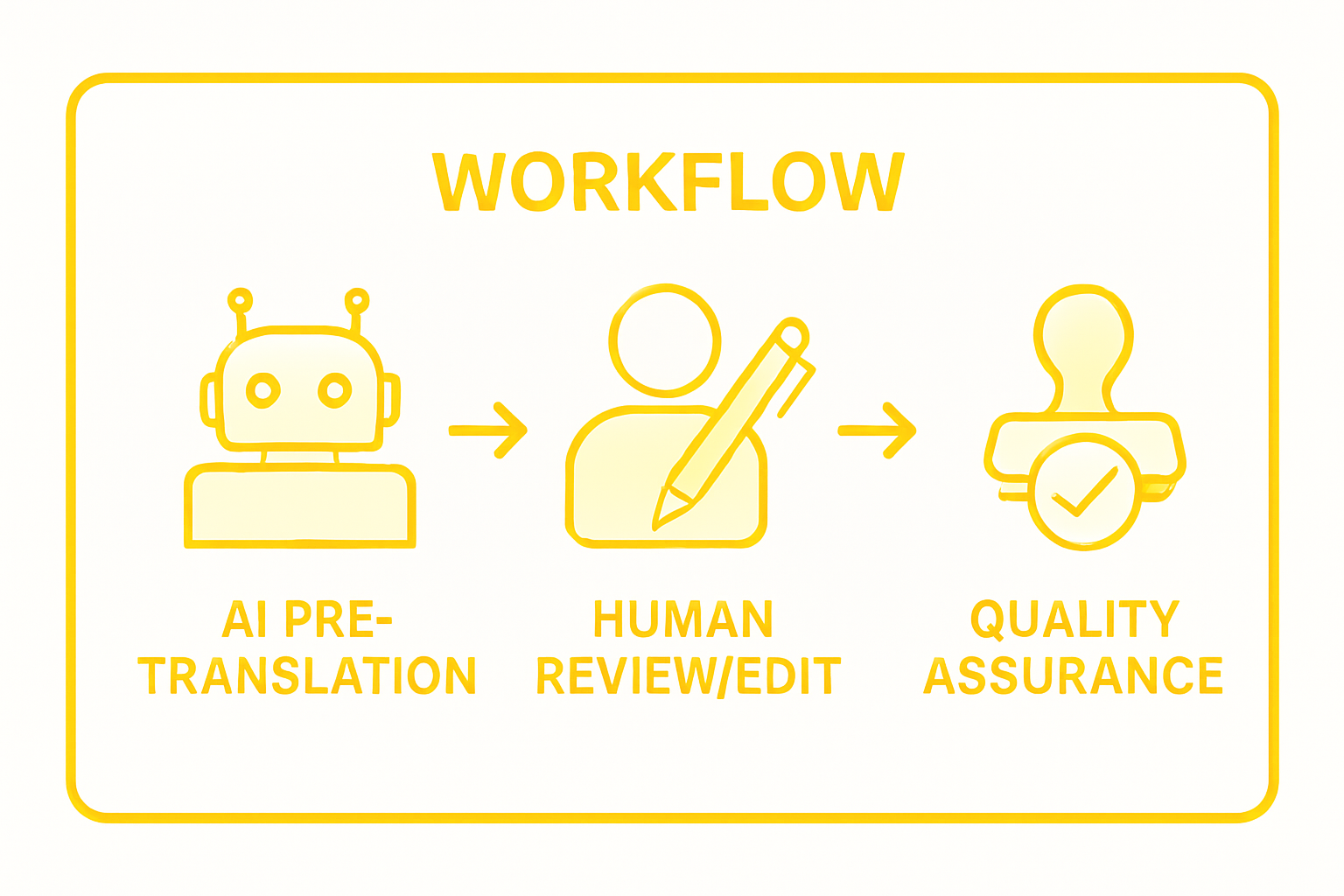
The fusion of artificial intelligence and human expertise represents a transformative approach to technical translation, addressing critical challenges of accuracy, speed, and compliance. AI+HUMAN workflows have emerged as a sophisticated solution that combines computational precision with nuanced human understanding, particularly in high-stakes technical translation environments where even minor errors can have significant consequences.
The ISO 17100:2015 standards emphasize the critical importance of human involvement in translation processes, recognizing that technological tools must be carefully integrated with human expertise. This framework validates the core principle of AI+HUMAN workflows: leveraging machine learning capabilities while maintaining rigorous human oversight and quality control. Such approaches enable translation providers to dramatically improve efficiency without compromising the intricate contextual understanding that only trained human professionals can provide.
Key components of effective AI+HUMAN workflows include:
Initial AI Translation Generation
Rapid initial content translation
Consistent terminology application
Quick first-pass processing
Human Expert Review
Contextual accuracy verification
Technical terminology validation
Cultural and nuanced language refinement
Final Quality Assurance
Comprehensive error checking
Compliance with industry-specific standards
Refined linguistic precision
Moreover, the ISO 11669:2024 translation project specifications provide a comprehensive framework for developing translation workflows that seamlessly integrate technological and human elements. AD VERBUM’s proprietary AI+HUMAN approach goes beyond traditional translation methods by implementing a rigorous, multi-stage process that ensures not just linguistic accuracy, but deep technical and contextual integrity across complex professional domains.
Terminology Enforcement and Consistency in Practice
In the realm of technical translation, terminology represents the critical foundation of precision and reliability. Inconsistent terminology can transform a technically accurate translation into a potentially dangerous document, especially in high-stakes industries like medical device manufacturing, pharmaceutical research, and complex engineering disciplines. Terminology management is not merely a linguistic exercise but a comprehensive strategy that ensures communication integrity across different languages and technical domains.

The ISO 20539:2023 vocabulary standard establishes a comprehensive framework for defining and maintaining consistent technical terminology across translation projects. This international standard provides critical guidance for creating and enforcing standardized linguistic protocols that prevent ambiguity, reduce interpretation risks, and maintain the intricate technical nuances essential in specialized professional communications.
Effective terminology enforcement involves multiple sophisticated strategies:
Centralized Terminology Databases
Comprehensive collection of approved technical terms
Multilingual term mappings
Regular updates from subject matter experts
Automated Terminology Validation
Real-time term checking during translation
Immediate flagging of non-approved terminology
Consistent application across entire document sets
Continuous Learning Mechanisms
Machine learning integration
Adaptive terminology refinement
Persistent improvement of translation accuracy
Moreover, the comprehensive vocabulary standards underscore the importance of creating robust linguistic frameworks that transcend traditional translation approaches. AD VERBUM’s AI+HUMAN workflow leverages these principles by combining advanced linguistic technologies with human expertise, ensuring that every translated document maintains absolute fidelity to the original technical specifications while meeting the most rigorous international standards.
Data Security and Compliance for Sensitive Documents
In an era of increasing cybersecurity threats and stringent regulatory requirements, data protection has become paramount for organizations handling sensitive technical documentation. Translation processes involving confidential information—such as medical research, pharmaceutical formulations, legal contracts, and proprietary engineering specifications—demand robust security frameworks that go beyond conventional data protection strategies.
The ISO 20771:2020 standards provide comprehensive guidelines for managing confidentiality in translation services, particularly for legal and highly sensitive documents. These standards specify rigorous competence requirements and confidentiality protocols that translation providers must implement to ensure absolute data integrity and protection against potential breaches or unauthorized disclosures.
Key components of a comprehensive data security strategy include:
Secure Infrastructure
Private cloud hosting
EU-based data centers
Encrypted communication channels
Strict access control mechanisms
Compliance Frameworks
GDPR alignment
HIPAA compliance
Industry-specific regulatory requirements
Regular security audits
Personnel Security
Background-verified linguists
Non-disclosure agreements
Specialized security training
Continuous monitoring protocols
Moreover, the ISO 17100:2015 translation service requirements emphasize the critical importance of implementing comprehensive data protection measures. AD VERBUM’s proprietary AI+HUMAN workflow is specifically engineered to meet these stringent standards, utilizing a closed-loop system that ensures sensitive information never enters public cloud environments or becomes exposed to unauthorized access.
Elevate Your Technical Translations with Proven Industry Standards and AD VERBUM’s Expertise
Navigating the complex landscape of technical translation standards requires uncompromising precision, rigorous quality control, and bulletproof data security. This article highlights critical challenges such as strict terminology enforcement, compliance with ISO norms like ISO 17100 and ISO 20539, and safeguarding sensitive information. These challenges are especially pressing in industries where mistranslations can lead to costly compliance failures or jeopardize safety.
AD VERBUM specializes in addressing these exact concerns through its proprietary AI+HUMAN workflow that combines advanced Large Language Model (LLM) technology with certified subject matter experts. Our process ensures total adherence to international standards, enforces your customized terminology, and guarantees zero data leakage by operating exclusively on secure EU servers. With over 25 years of experience and certifications including ISO 17100, ISO 27001, and HIPAA, we deliver translations that meet the highest demands of Life Sciences, Legal, and Manufacturing sectors.
Discover how to transform your translation challenges into competitive advantages with AD VERBUM’s specialized AI translation services. Don’t compromise on compliance or accuracy when your documents depend on it.
Ready to secure flawless, standards-compliant technical translations underpinned by unmatched data security? Visit https://adverbum.com today and connect with a team that sets the industry benchmark for precision and safety.
Frequently Asked Questions
What are the key elements of industry standards in technical translation?
The key elements include linguistic competence, technical terminology management, quality assurance protocols, and confidentiality and data security.
How do ISO standards impact the quality of technical translation?
ISO standards, such as ISO 17100:2015 and ISO 20539:2023, provide essential guidelines for translation processes, ensuring consistency, quality, and adherence to international benchmarks for accuracy and reliability.
What is the role of AI in technical translation?
AI enhances technical translation by providing initial content translations quickly and consistently. However, human expertise is vital for contextual accuracy, technical validation, and cultural nuances, especially in high-stakes environments.
Why is terminology management important in technical translation?
Effective terminology management maintains consistency and precision in translations, preventing ambiguity and ensuring that critical technical details are communicated accurately across different languages.
Recommended
