


Why Human Oversight in Translation Protects Compliance

Regulatory compliance failures linked to automated translation now account for over 30 percent of documentation errors in European pharmaceutical firms. For American and European compliance managers, ensuring ironclad accuracy in critical texts is not just best practice—it is a necessity. This article clarifies how the AI+HUMAN workflow protects your organization from costly mistranslations and meets the toughest industry standards for security, precision, and terminology consistency.
Table of Contents
Key Takeaways
Point | Details |
Human Oversight | Professional translators are essential for refining machine-generated translations, ensuring cultural nuance and regulatory compliance. |
AI+HUMAN Workflow | Integrating AI with human expertise enhances translation accuracy and addresses the complexities of specialized documentation. |
Regulatory Compliance | Human oversight is increasingly mandated in translation processes to mitigate risks and maintain accuracy in regulated industries. |
Terminology Consistency | Implementing a rigorous terminology management system is crucial for ensuring precision and protecting sensitive information during translations. |
Defining Human Oversight in Translation
Human oversight in translation represents a strategic collaboration between artificial intelligence and professional linguistic expertise, ensuring translations maintain precision, cultural nuance, and regulatory compliance. This critical process goes beyond simple mechanical translation, involving sophisticated human intervention that protects the integrity of complex documentation.
At its core, human oversight involves professional translators actively supervising and refining machine-generated translations. Sophisticated translation workflows highlight how human experts integrate contextual understanding and cultural knowledge that automated systems cannot independently achieve. These professionals scrutinize machine outputs, identifying potential mistranslations, contextual misunderstandings, and subtle linguistic complexities that could compromise communication accuracy.
The role of human oversight becomes particularly crucial in regulated industries like pharmaceuticals, medical devices, and legal documentation. Translators must not only translate words but interpret technical terminology, understand regulatory requirements, and maintain precise meaning across different linguistic contexts. By combining AI+HUMAN workflows, organizations can leverage technological efficiency while preserving the nuanced expertise that only trained professionals can provide.
Professional translators exercise critical control by intervening, correcting, and refining automated outputs to preserve translation quality. Their oversight ensures translations meet stringent ethical standards, protect organizational integrity, and minimize potential risks associated with miscommunication.
Pro tip: Always establish clear review protocols that specify exactly how human translators will validate and refine machine-generated translations before final documentation release.
Translation Technologies Compared: MT, NMT, LLM
Machine Translation technologies have undergone significant evolution, transforming how organizations approach linguistic conversion across complex global communication landscapes. From rudimentary rule-based systems to sophisticated artificial intelligence platforms, these technologies represent increasingly nuanced approaches to bridging linguistic barriers.
Traditional Machine Translation (MT) operates through direct word-for-word replacement, typically producing literal translations with limited contextual understanding. Advanced translation methodologies demonstrate how Neural Machine Translation (NMT) significantly improved upon these early approaches by introducing deep learning techniques that generate more fluid, contextually aware outputs. NMT uses neural network architectures that can understand broader linguistic patterns, resulting in translations with improved grammatical structure and semantic coherence.
Large Language Models (LLMs) represent the most sophisticated translation technology, leveraging extensive training data and complex algorithmic structures to generate translations that approach human-level comprehension. Unlike previous technologies, LLMs can interpret nuanced linguistic contexts, understand industry-specific terminology, and maintain consistent tone across different document types. AD VERBUM’s proprietary LLM technology distinguishes itself by providing precise, secure translations specifically engineered for regulated industries like pharmaceuticals and medical devices.
Each translation technology offers distinct advantages and limitations. While MT provides basic linguistic conversion, NMT introduces contextual understanding, and LLMs deliver sophisticated, context-aware translations. However, the complexity of specialized documentation invariably requires human expertise to validate technical accuracy, cultural appropriateness, and regulatory compliance.
Here’s a side-by-side overview of major translation technologies:
Technology | Core Method | Contextual Understanding | Best Use Cases |
MT | Rule-based, word-for-word | Limited | Simple texts, low-risk content |
NMT | Neural networks, deep learning | Moderate | General business communication |
LLM | Advanced AI, massive data training | High | Regulated, complex documents |
Pro tip: Implement a comprehensive review protocol that combines AI-generated translations with expert human validation to maximize translation accuracy and minimize potential compliance risks.
Core Process: The AI+HUMAN Workflow Explained
AI+HUMAN translation represents a sophisticated collaborative approach that combines technological efficiency with human linguistic expertise. This innovative workflow transforms traditional translation methodologies by integrating advanced artificial intelligence with the nuanced understanding of professional translators, creating a robust system that delivers unprecedented accuracy and compliance.
Comprehensive translation workflows reveal a structured process where machine learning technologies generate initial translation drafts, which are then meticulously reviewed and refined by subject matter experts. The process typically unfolds in four critical stages: initial AI generation, human review, contextual refinement, and final quality assurance. AD VERBUM’s proprietary approach ensures that every translation undergoes rigorous scrutiny, addressing potential linguistic, cultural, and technical nuances that automated systems might overlook.
The first stage involves our proprietary Large Language Model (LLM) generating an initial translation draft. Unlike traditional machine translation tools, AD VERBUM’s AI understands complex linguistic contexts and can maintain industry-specific terminology consistency. Human translators then enter the workflow, conducting a comprehensive review that goes beyond simple error correction. These experts assess contextual accuracy, verify technical terminology, ensure regulatory compliance, and adapt translations to specific cultural and professional expectations.
Each translation passes through multiple verification checkpoints, with specialized linguists who possess deep expertise in specific domains like pharmaceuticals, legal documentation, or medical devices. This multilayered approach guarantees that translations are not just linguistically accurate but also fully compliant with the most stringent international regulatory standards. By combining machine speed with human precision, AD VERBUM delivers translations that meet the highest levels of accuracy and reliability.

Pro tip: Develop a structured review checklist that guides human translators through systematic verification of AI-generated translations, ensuring comprehensive quality control.
Summary of key human oversight touchpoints in translation workflow:
Stage | Primary Human Action | Compliance Contribution |
AI Draft Generation | Configuration and setup | Ensures secure, accurate output |
Human Review | Contextual assessment | Detects errors, aligns terminology |
Contextual Refinement | Industry adaptation | Maintains regulatory language |
Quality Assurance | Final approval and audit | Documents compliance, mitigates risk |
Regulatory Requirements Driving Human Oversight
Modern regulatory frameworks increasingly recognize the critical importance of human oversight in artificial intelligence systems, particularly in translation technologies where precision and compliance are paramount. These emerging legal standards demand a sophisticated approach that goes beyond traditional translation methodologies, emphasizing the essential role of human expertise in maintaining accuracy and protecting organizational integrity.
AI regulatory frameworks now explicitly mandate human supervision in translation processes to mitigate risks associated with automated language conversion. The European AI Act represents a pivotal example, establishing stringent requirements that compel organizations to implement robust human review mechanisms. AD VERBUM’s approach aligns precisely with these regulatory expectations, ensuring that every translation undergoes comprehensive human validation to address potential linguistic, cultural, and technical complexities that automated systems might inadvertently introduce.
In highly regulated industries such as pharmaceuticals, medical devices, and legal services, human oversight serves as a critical compliance safeguard. Translators with specialized domain expertise meticulously review AI-generated translations, verifying technical terminology, ensuring regulatory alignment, and protecting against potential misinterpretations that could result in significant legal or operational risks. This multilayered approach goes beyond simple error correction, focusing on maintaining the nuanced meaning, professional tone, and precise technical context required in sensitive documentation.
The evolving regulatory landscape demands a proactive approach to translation compliance. Organizations must develop comprehensive oversight protocols that integrate human expertise seamlessly with advanced AI technologies. AD VERBUM’s AI+HUMAN workflow represents a forward-thinking solution that not only meets but exceeds current regulatory requirements, providing a gold standard for translation accuracy and reliability in complex global communication environments.
Pro tip: Create a detailed audit trail documenting each step of human review in your translation workflow to demonstrate regulatory compliance and maintain transparent quality control processes.
Risks of Unchecked Automated Translation
Automated translation technologies present significant risks when deployed without rigorous human oversight, particularly in industries where precision and compliance are mission-critical. These risks extend far beyond simple linguistic errors, potentially compromising organizational integrity, legal standing, and professional reputation.
Automated translation vulnerabilities can manifest through subtle yet consequential mistranslations that may fundamentally alter document meaning. In regulated sectors like pharmaceuticals, medical devices, and legal documentation, even minor terminological inaccuracies can trigger substantial compliance breaches, regulatory penalties, and operational disruptions. Machine translation systems frequently struggle with contextual nuance, technical terminology, and industry-specific language conventions that require sophisticated human interpretation.
The primary risks of unchecked automated translation include terminology inconsistency, loss of cultural context, and potential misinterpretation of critical technical specifications. AD VERBUM’s AI+HUMAN workflow directly addresses these challenges by integrating specialized human translators who possess deep domain expertise. These professionals do not merely correct grammatical errors but comprehensively validate translations against regulatory standards, ensuring precise communication that maintains the original document’s technical integrity and legal compliance.
Moreover, automated translation systems inherently lack the contextual understanding necessary for handling sensitive information across different professional domains. They cannot independently recognize subtle linguistic nuances, professional tone requirements, or industry-specific communication protocols. Without human intervention, organizations expose themselves to potential miscommunication risks that could result in significant financial, legal, and reputational consequences.
Pro tip: Implement a comprehensive translation risk assessment protocol that systematically evaluates machine-generated translations against industry-specific compliance standards before finalizing any critical documentation.
Ensuring Data Security and Terminology Consistency
Data security and terminology consistency represent critical pillars in professional translation workflows, particularly for organizations operating in highly regulated industries where precision and confidentiality are paramount. AD VERBUM’s approach integrates advanced technological safeguards with meticulous human expertise to protect sensitive information while maintaining absolute linguistic accuracy.
Specialized translation protocols demonstrate how human oversight ensures comprehensive protection of technical documentation through strategic terminology management. Professional translators utilize sophisticated tools and domain-specific knowledge to create robust translation frameworks that prevent data leakage and maintain consistent technical language across complex documents. This multilayered approach goes far beyond simple word-for-word conversion, focusing on preserving the intricate nuances of specialized professional communication.
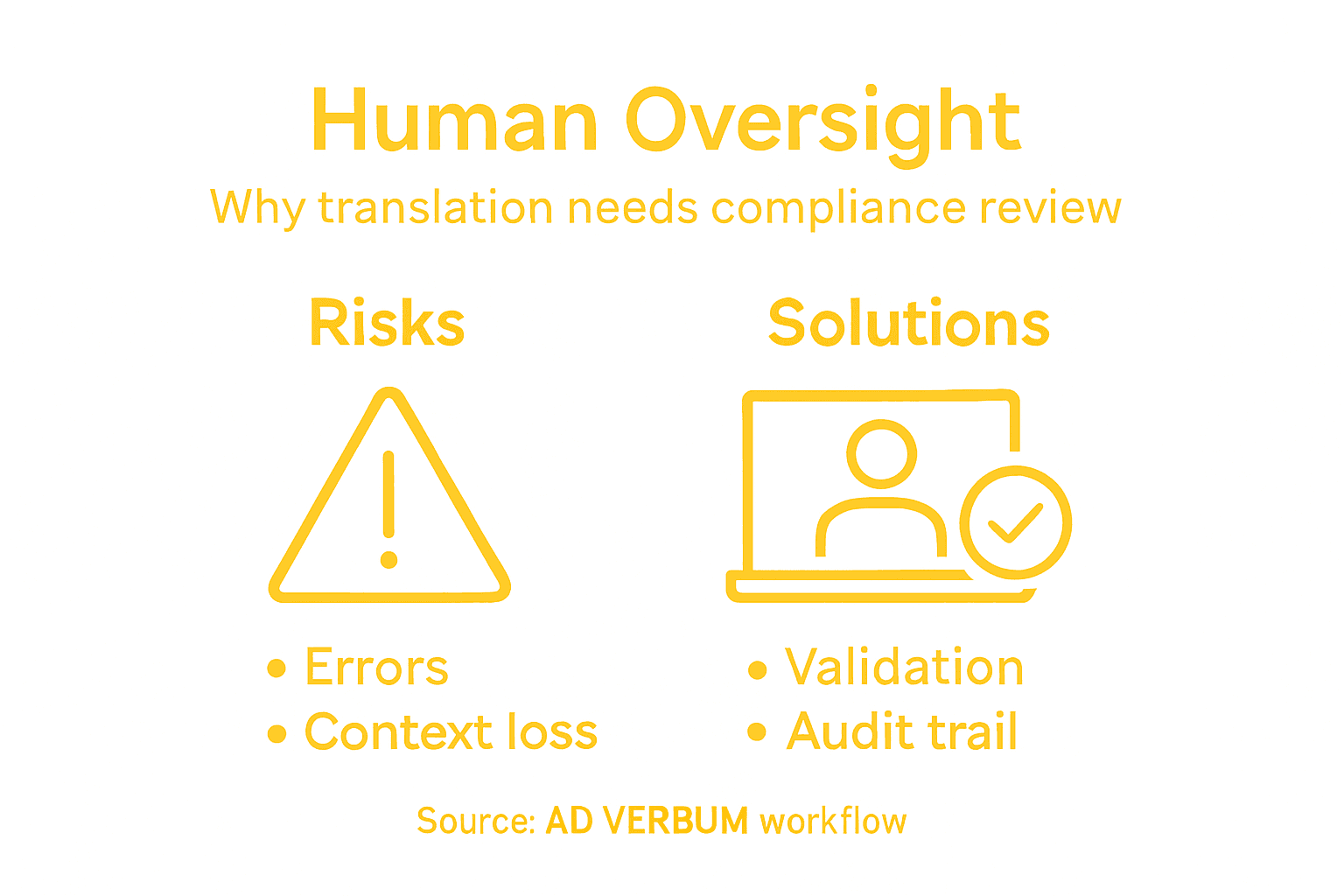
In regulated sectors such as pharmaceuticals, medical devices, and legal services, terminology consistency is not merely a linguistic preference but a fundamental compliance requirement. AD VERBUM’s AI+HUMAN workflow implements rigorous terminology validation processes where human experts cross-reference translations against industry-specific glossaries, ensuring that every technical term maintains its precise meaning and regulatory compliance. By combining proprietary AI technologies with human domain expertise, organizations can protect against potential misinterpretations that could compromise critical documentation.
The integration of advanced security protocols within the translation process further distinguishes AD VERBUM’s approach. By utilizing private, secure EU-based servers and implementing stringent data protection measures, the company ensures that sensitive information remains confidential throughout the translation workflow. Human translators serve as critical gatekeepers, verifying not just linguistic accuracy but also maintaining the highest standards of data privacy and intellectual property protection.
Pro tip: Develop a comprehensive terminology management system that centralizes industry-specific glossaries and creates a secure, continuously updated reference database for translation teams.
Precision and Compliance Start with Human Oversight in Translation
The article highlights the urgent need for human oversight alongside artificial intelligence to protect compliance in regulated industries. It reveals key challenges such as minimizing mistranslations, enforcing strict terminology, and ensuring data security—challenges that automated systems alone cannot solve. Readers who manage translations for pharmaceuticals, legal affairs, or medical devices understand that a single error can have severe consequences.
AD VERBUM addresses these critical issues through its proprietary AI+HUMAN workflow. Our Large Language Model (LLM) technology goes beyond public Machine Translation (MT) and Neural Machine Translation (NMT) tools by fully enforcing client-specific terminology and safeguarding all data within an ISO 27001 certified EU-hosted environment. Complemented by over 3,500 expert linguists with specialized domain knowledge, we guarantee translations that meet and exceed evolving regulatory standards such as GDPR, HIPAA, and MDR.
Take control of your translation compliance today with a solution tailored for high-stakes, highly regulated sectors. Learn more about how our specialized AI translation services can safeguard your organization and reduce risks by combining cutting-edge AI with unwavering human expertise. Visit AD VERBUM now to explore a translation partnership that protects your integrity and accelerates your global communication.
Frequently Asked Questions
What is human oversight in translation?
Human oversight in translation refers to the collaboration between professional translators and artificial intelligence to ensure translations are accurate, culturally nuanced, and compliant with regulatory standards.
Why is human oversight essential in regulated industries?
Human oversight is crucial in regulated industries like pharmaceuticals and legal documentation, as it ensures that translations maintain precise meanings and meet specific technical and regulatory requirements, reducing risks associated with miscommunication.
How does the AI+HUMAN workflow work in translation?
The AI+HUMAN workflow combines machine-generated translations with expert human review. Initially, AI generates a draft, which is then thoroughly reviewed and refined by professional translators for accuracy and compliance.
What risks are associated with unchecked automated translation?
Unchecked automated translation can lead to terminology inconsistencies, loss of cultural context, and critical misinterpretations, potentially resulting in non-compliance, legal issues, and damaged organizational reputation.
Recommended

