


How to Ensure Compliant Translations for Regulated Sectors

Compliance Managers and Heads of Localization across Europe know that a single mistranslation can spark regulatory headaches or stall entire product launches. Each document in the pharmaceutical and medical device sectors carries heavy legal weight, demanding meticulous scrutiny from source review to final verification. By prioritizing structured workflows, precise terminology management, and airtight archiving protocols, you gain both peace of mind and a transparent path to demonstrate compliance—even during the most rigorous inspections.
Table of Contents
Quick Summary
Key Point | Explanation |
1. Assess Source Content Thoroughly | Conduct a document integrity review to understand the purpose, complexity, and legal aspects of your source material. |
2. Build a Terminology Management Strategy | Develop a centralized database of industry-specific terminology to ensure consistency and accuracy in translations. |
3. Implement Secure AI+HUMAN Workflows | Combine AI efficiency with human expertise to maintain translation quality and compliance in regulated sectors. |
4. Establish a Comprehensive Verification Process | Use a multi-layered review procedure to ensure translations adhere to regulatory standards and are highly accurate. |
5. Document and Archive Compliance Evidence | Create a robust documentation system that captures every translation step for regulatory inspections and audits. |
Step 1: Assess Source Content and Compliance Needs
Assessing source content represents the foundational step in creating compliant translations for regulated sectors. This critical phase determines the translation strategy and ensures your documentation meets rigorous industry standards.
Begin by conducting a comprehensive document integrity review that examines every aspect of your source material. This means carefully evaluating the document’s purpose, technical complexity, legal implications, and target audience. For regulated industries like pharmaceuticals, medical devices, or legal services, each document demands meticulous scrutiny. You will need to identify specific terminology, understand contextual nuances, and recognize potential translation challenges before initiating the localization process.
Keystone elements to assess include document type, regulatory requirements, technical complexity, and potential linguistic risks. Professional translators working in regulated sectors must understand not just language translation but the intricate compliance landscape surrounding the content.
Pro tip: Create a standardized document assessment template that captures critical metadata like regulatory standards, technical complexity, and potential translation risks to streamline your initial review process.
Step 2: Integrate Terminology and Translation Assets
Successfully integrating terminology and translation assets represents a critical phase in creating compliant translations for regulated industries. This step transforms raw linguistic resources into a powerful strategic framework that ensures consistency and precision across all translated documents.
Start by developing a comprehensive terminology management strategy that centralizes industry specific glossaries, translation memories, and reference materials. Your goal is to build a robust linguistic infrastructure that captures technical nuances unique to your sector. For pharmaceutical translations, this might include medical device terminology, clinical research language, or regulatory compliance vocabulary. Collect existing glossaries, style guides, previous translations, and technical documentation to create a comprehensive terminology database that translators can reference.

The integration process requires collaboration between subject matter experts, translators, and compliance managers. Establish clear protocols for updating and maintaining these linguistic assets, ensuring that every translation reflects the most current technical and regulatory language standards. Your terminology assets should be dynamic living resources that evolve with industry changes and regulatory updates.
Pro tip: Implement a periodic review process that audits your terminology assets every six months to verify accuracy and alignment with current regulatory requirements.
Step 3: Deploy Secure AI+HUMAN Translation Workflow
Deploying a secure AI+HUMAN translation workflow represents the critical operational phase where theoretical compliance strategies transform into practical translation execution. This step bridges technological innovation with human expertise to ensure absolute precision in regulated document translation.
Implement your workflow by strategically integrating AI+HUMAN translation processes that leverage cutting-edge artificial intelligence while maintaining rigorous human oversight. Begin by configuring your AI translation system with strict security protocols that prevent data leakage and ensure complete confidentiality. Select subject matter experts who specialize in your specific industry regulatory requirements to serve as human reviewers. These professionals will validate the AI generated translations technical accuracy linguistic nuance and compliance alignment.
Establish clear procedural checkpoints where human translators comprehensively review and refine the AI generated content. This approach combines the speed and consistency of artificial intelligence with the contextual understanding and regulatory knowledge of experienced human professionals. Develop comprehensive tracking mechanisms that document every stage of the translation process creating an auditable trail that demonstrates your commitment to precision and regulatory compliance.
Pro tip: Create a detailed translation workflow map that explicitly defines roles responsibilities and verification points for both AI and human team members.
Compare how AI vs. Human expertise contribute to compliance translation processes:
Contribution Type | AI Translation Systems | Human Expert Review |
Speed | Processes large volumes rapidly | Slower, detail-oriented |
Consistency | Uniform terminology and structure | Adapts to context and nuances |
Regulatory judgment | Limited to programmed rules | Interprets complex requirements |
Error detection | Flags obvious inconsistencies | Identifies subtle or technical errors |
Step 4: Verify Regulatory Adherence and Accuracy
Verifying regulatory adherence and accuracy represents the final critical checkpoint in ensuring your translations meet the stringent requirements of highly regulated industries. This step transforms your translation from a linguistic exercise into a legally compliant document that can withstand the most rigorous professional scrutiny.
Implement a comprehensive verification process using translation quality assurance protocols that systematically evaluate every aspect of your translated document. Assemble a multidisciplinary review team that includes subject matter experts specialized in your specific regulatory domain such as medical device regulations pharmaceutical compliance standards or legal documentation requirements. These professionals will meticulously cross reference the translated text against original source materials industry specific terminology guidelines and applicable regulatory frameworks.
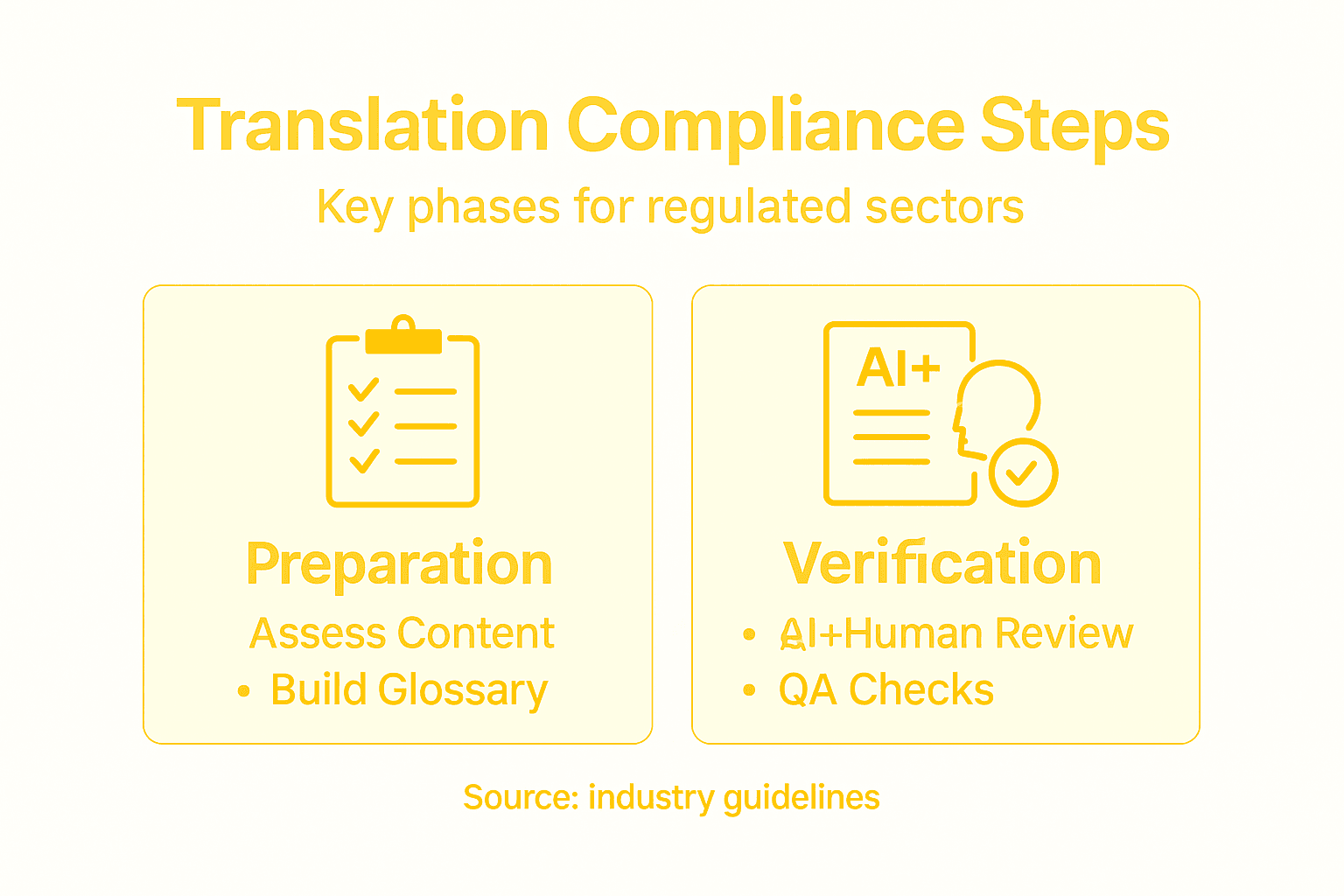
Create a structured verification workflow that includes multiple layers of review. The first layer involves automated compliance checks using advanced AI technology that can detect potential terminology inconsistencies or regulatory red flags. The second layer requires manual review by certified translators who understand the nuanced technical and legal implications of each translated segment. Your final verification should produce a comprehensive audit trail documenting each review stage proving that your translation meets the highest standards of accuracy and regulatory compliance.
Pro tip: Develop a standardized verification scorecard that quantifies translation accuracy regulatory alignment and potential compliance risks for each document.
Step 5: Document and Archive Compliance Evidence
Documenting and archiving compliance evidence represents the critical final safeguard that protects your organization from potential legal and regulatory challenges. This systematic process transforms translation workflows from ephemeral activities into verifiable, auditable records that can withstand intense professional scrutiny.
Implement a comprehensive documentation management strategy that captures every detail of your translation process. This includes creating digital archives that record translation timestamps reviewer credentials version control metadata source document comparisons and quality assessment scores. Develop a robust electronic filing system that automatically timestamps and encrypts each document segment ensuring an immutable record of your translation journey that can be quickly retrieved during regulatory inspections or legal reviews.
Establish multiple layers of documentation that go beyond simple file storage. Create detailed audit trails that track not just the final translated document but every intermediate step in the translation process. This means recording initial source document characteristics AI translation outputs human reviewer comments version modification timestamps and final approved translations. Your documentation should provide a transparent narrative that demonstrates rigorous quality control compliance with industry standards and commitment to linguistic precision.
Pro tip: Implement a digital archiving system with automated metadata tagging and advanced search capabilities to enable lightning fast retrieval of compliance documentation.
Here is a summary of key compliance risks and mitigation strategies for regulated translation projects:
Compliance Risk | Typical Impact | Mitigation Strategy |
Regulatory misalignment | Legal exposure or penalties | Expert reviews, terminology checks |
Terminology inconsistency | Product safety issues or confusion | Central glossary, frequent updates |
Data confidentiality lapse | Data breaches, loss of credibility | Secure AI systems, encryption |
Poor audit trail documentation | Failed inspections or fines | Automated tracking, full archiving |
Ensure Absolute Compliance with AD VERBUM’s Specialized AI+HUMAN Translation
Accurate and compliant translation in regulated sectors demands more than language skills. The critical challenges outlined in “How to Ensure Compliant Translations for Regulated Sectors”—from precise terminology integration to secure workflows and detailed audit trails—require a solution built for complexity and safety. Companies face risks of regulatory misalignment, data breaches, and costly errors if translations lack rigorous quality controls and domain expertise.
AD VERBUM addresses these pain points with a proprietary AI+HUMAN workflow that combines a secure Large Language Model hosted on EU servers with 3,500+ subject matter linguists. Our service enforces strict terminology adherence, ensures contextual accuracy, and provides comprehensive compliance documentation. This approach surpasses public NMT and legacy MT limitations by guaranteeing zero data leakage and seamless integration of your translation assets.
Elevate your compliance translation process today. Learn how our regulated industry expertise and secure technology reduce your risk and accelerate your delivery by visiting AD VERBUM Contact. Start your journey toward error-free, fully auditable translations that stand up to the highest regulatory scrutiny.
Frequently Asked Questions
How do I assess the source content for compliance needs?
To ensure compliant translations, start by conducting a thorough document integrity review. Evaluate the document’s purpose, technical complexity, and legal implications, so you identify compliance risks before translation begins.
What should I include in my terminology management strategy?
Your terminology management strategy should centralize industry-specific glossaries, translation memories, and reference materials. Build a comprehensive terminology database that captures the unique language of your sector to ensure consistency across all translations.
How can I effectively integrate AI into my translation workflow?
To integrate AI into your translation process, develop a secure AI+HUMAN workflow that combines the speed of AI with the expertise of human reviewers. Ensure that all AI systems are configured with strict security protocols to safeguard sensitive information.
What steps should I take to verify the accuracy of my translations?
Implement a multi-layered verification process that includes both automated compliance checks and manual reviews by qualified experts. This structured workflow ensures that your translations meet regulatory standards and maintains accuracy throughout the process.
How can I ensure proper documentation and archiving for compliance?
Establish a documentation management strategy that records every aspect of your translation workflow, creating an immutable digital archive. This should include timestamps, reviewer credentials, and audit trails to demonstrate compliance and accuracy during inspections.
What are the common compliance risks in translation, and how can I mitigate them?
Common compliance risks include regulatory misalignment and data confidentiality lapses. Mitigate these risks by conducting expert reviews, maintaining a centralized glossary, and implementing secure systems to protect sensitive data.
Recommended