


Step-by-Step Guide to Compliant AI Translation Success
- Dec 19, 2025
- 8 min read

More than 60 percent of American companies face costly setbacks from compliance gaps in translation processes. As data security rules tighten worldwide, ensuring your confidential content remains protected has never been more critical for any American organization navigating global markets. This step by step guide reveals how to build a secure, regulation-ready translation workflow that minimizes risk and keeps sensitive information safe.
Table of Contents
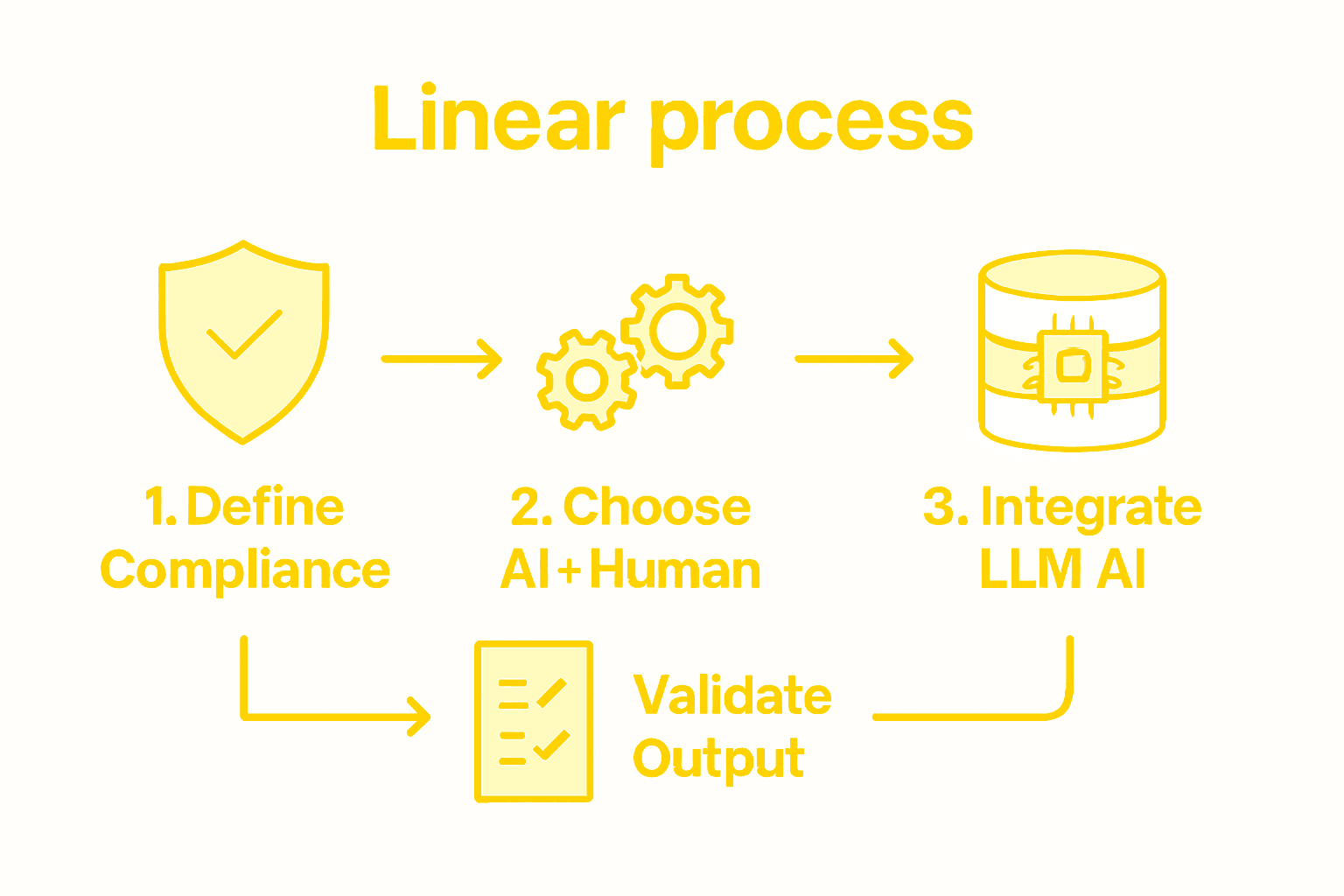
Step 1: Define Compliance And Security Requirements For Translation
Step 2: Select The Right Ai+Human Workflow For Regulated Content
Step 3: Integrate Translation Assets With Proprietary Llm-Based Ai
Step 4: Leverage Mtpe, Hybrid, Tiered, And Agentic Translation Best Practices
Step 5: Validate Output With Expert And Iso-Aligned Quality Checks
Quick Summary
Key Point | Explanation |
1. Define Compliance Requirements | Identify legal and regulatory standards like GDPR and HIPAA to protect sensitive data during translation processes. |
2. Select AI+HUMAN Workflow | Choose a translation workflow that balances AI efficiency with human oversight for accuracy and compliance in regulated content. |
3. Integrate Translation Assets | Audit and enhance existing translation resources to improve AI translation quality and consistency through a proprietary system. |
4. Implement Advanced Translation Approaches | Use MTPE and hybrid models to maximize efficiency while ensuring high linguistic precision across various content complexities. |
5. Validate with Expert Checks | Establish a multi-layered validation process involving human experts and automated tools to ensure adherence to industry standards. |
Step 1: Define compliance and security requirements for translation
Defining compliance and security requirements is the foundational step in creating a robust translation workflow that protects sensitive information and meets regulatory standards. This process requires a comprehensive understanding of data protection protocols and industry specific regulations.
Start by identifying the specific legal and regulatory frameworks that govern your industry and translation needs. For organizations working in regulated sectors like healthcare, legal services, or finance, this means carefully mapping out requirements from standards such as GDPR, HIPAA, and industry specific compliance guidelines. The European Commission’s voluntary Code of Practice provides an excellent framework for understanding how to align AI translation practices with legal standards.
Key areas to assess include data privacy, information security, linguistic accuracy, and confidentiality protocols. Organizations should develop a comprehensive checklist that covers:
Secure data transmission methods
Encryption standards for translation assets
Access control for translation platforms
Linguistic validation processes
Audit trails for translation workflows
Compliance documentation requirements
By meticulously defining these requirements upfront, organizations can create a translation strategy that not only meets regulatory standards but also protects critical intellectual property and sensitive information.
Pro tip: Consult with legal and compliance experts who specialize in your specific industry to develop the most accurate and comprehensive translation security framework.
Step 2: Select the right AI+HUMAN workflow for regulated content
Selecting the appropriate AI+HUMAN workflow for regulated content requires a strategic approach that balances technological precision with human expertise. Your goal is to create a translation process that meets rigorous compliance standards while maintaining linguistic accuracy and data security.
Begin by evaluating your specific industry requirements and understanding the nuanced demands of your content. Master the AI+Human Translation Process for compliance involves carefully mapping out each stage of translation to ensure maximum accuracy and regulatory alignment. This means developing a workflow that integrates advanced AI capabilities with subject matter expert oversight.
Key considerations for selecting the right workflow include:
Linguistic complexity of source materials
Regulatory requirements specific to your industry
Confidentiality and data protection protocols
Required turnaround times
Technical specialization needed
Compliance documentation requirements
The ideal AI+HUMAN workflow will leverage machine learning technologies to generate initial translations while maintaining a critical human review stage where specialized experts validate technical accuracy linguistic nuance and regulatory compliance. This approach combines the speed of AI with the precision of human expertise ensuring that every translated document meets the highest standards of quality and regulatory requirements.

Pro tip: Create a detailed scoring matrix to evaluate potential AI+HUMAN translation workflows that weighs technical capabilities compliance requirements and cost effectiveness.
Step 3: Integrate translation assets with proprietary LLM-based AI
Integrating translation assets with a proprietary LLM-based AI requires a methodical approach that transforms raw linguistic resources into powerful translation engines. Your objective is to create a sophisticated system that leverages existing translation memories term bases and glossaries to enhance AI translation precision and consistency.
The integration process begins with a comprehensive audit of your existing translation assets. Translation Technology Trends 2025 demonstrate that successful LLM integration depends on understanding the unique characteristics of your linguistic resources. This means carefully examining translation memories term bases style guides and previous translation projects to create a robust training dataset for your proprietary AI system.
Key steps in the integration process include:
Cleaning and standardizing existing translation memories
Extracting domain specific terminology
Mapping linguistic patterns and contextual nuances
Creating secure data ingestion protocols
Developing custom training datasets
Establishing continuous learning mechanisms
The most effective integration strategies treat translation assets as living repositories of linguistic intelligence. Your proprietary LLM-based AI should not simply consume these assets but learn from them dynamically adapting to subtle contextual shifts and industry specific language variations. This approach transforms traditional translation memories from static reference materials into intelligent training mechanisms that continuously refine the AI translation process.
Pro tip: Implement a rigorous validation framework that systematically cross references AI generated translations against your most authoritative translation assets to ensure consistent quality and terminology accuracy.
Step 4: Leverage MTPE, hybrid, tiered, and agentic translation best practices
Mastering advanced translation workflows requires a sophisticated understanding of machine translation post editing (MTPE), hybrid approaches, tiered translation strategies, and agentic translation methodologies. Your goal is to create a flexible translation ecosystem that maximizes technological efficiency while maintaining the highest standards of linguistic precision.
How to Ensure Translation Accuracy highlights the critical importance of selecting the right translation approach for your specific content requirements. MTPE services represent a crucial bridge between raw machine translation and human expertise where AI generated translations receive targeted human refinement. This approach allows organizations to significantly reduce translation times while preserving linguistic nuance and technical accuracy.
Key considerations for implementing advanced translation workflows include:
Matching translation strategy to content complexity
Defining clear human intervention thresholds
Establishing multi tier review processes
Creating specialized linguistic validation protocols
Developing adaptive AI learning mechanisms
Implementing context aware translation strategies
The most effective translation workflows combine multiple methodological approaches. Hybrid translation models leverage AI capabilities for initial content generation while incorporating human expertise for critical validation. Tiered translation strategies allow for different levels of human intervention based on content sensitivity and complexity. Agentic translation takes this concept further by creating intelligent systems that can make contextual decisions about translation approaches dynamically.
Here’s a comparison of advanced translation workflow approaches and their primary benefits:
Approach | Main Focus | Business Impact |
MTPE | Human refinement of AI MT | Speeds delivery, preserves quality |
Hybrid | AI + human collaboration | Balances efficiency and accuracy |
Tiered | Variable review levels | Tailors oversight to content risk |
Agentic | Contextual AI decisions | Adapts workflows for best results |
Pro tip: Develop a flexible translation workflow matrix that allows you to rapidly adjust human intervention levels and AI capabilities based on specific project requirements and content complexity.
Step 5: Validate output with expert and ISO-aligned quality checks
Validating translation output requires a comprehensive approach that combines technological precision with human expertise and rigorous quality assurance protocols. Your objective is to create a multilayered validation process that ensures absolute linguistic accuracy technical compliance and regulatory adherence.
7 Steps to a Translation Quality Checklist provides critical insights into developing robust validation frameworks for regulated content. The validation process goes beyond simple error checking combining advanced linguistic analysis expert review and systematic quality measurement techniques to guarantee translation excellence.
Key components of an effective validation strategy include:
Implementing multi stage review processes
Engaging subject matter experts for specialized content
Utilizing automated linguistic quality assessment tools
Comparing translations against approved terminology databases
Conducting contextual accuracy reviews
Verifying compliance with industry specific standards
The most sophisticated validation approaches integrate human expertise with advanced technological tools. Expert reviewers provide critical contextual understanding while AI powered quality assessment systems identify subtle linguistic nuances and potential compliance risks. This hybrid approach ensures that translations not only meet technical accuracy standards but also capture the intricate contextual and regulatory requirements specific to each document.
The following table summarizes key validation checks for regulated translation projects:
Validation Check | Objective | Example Application |
Subject Expert Review | Ensure industry accuracy | Validate legal contract terms |
Automated QA Tools | Detect linguistic errors | Flag grammar inconsistencies |
Terminology Matching | Enforce approved vocabulary | Align brand language usage |
Compliance Verification | Confirm regulatory adherence | Meet GDPR/ISO standards |
Pro tip: Develop a weighted scoring system for translation validation that assigns different importance levels to linguistic accuracy technical precision and regulatory compliance based on the specific content type and industry requirements.
Achieve Compliant AI Translation with AD VERBUM’s Precision AI+HUMAN Workflow
The article highlights the challenge companies face in balancing regulatory compliance, data security, and linguistic accuracy when adopting AI-powered translation workflows. As it stresses, merely relying on public Neural Machine Translation tools risks data leakage and terminological errors that can undermine highly regulated industries such as legal, medical, and finance. The need for a secure proprietary system that enforces strict terminology controls and rigorous validation is clear.
AD VERBUM addresses these exact pain points through its AI+HUMAN service featuring a proprietary LLM-based AI ecosystem hosted fully within EU servers. This ensures zero exposure of sensitive data while delivering certified translation quality compliant with GDPR, HIPAA, and industry standards. By deeply integrating Translation Memories and term bases, combined with expert linguistic review, AD VERBUM provides unmatched consistency and contextual precision required for high-stakes documents. You gain:
Secure in-house AI processing with no public cloud risk
Terminology enforcement tailored to your regulatory framework
ISO-certified workflows for full compliance and auditability
Ready to experience the safest, most accurate AI translation? Explore how AD VERBUM’s specialized solutions align with your compliance priorities at AD VERBUM. Discover the future of translation technology in regulated sectors by visiting Step-by-Step Guide to Compliant AI Translation Success. Contact us today to secure your high-precision, compliant translation process with a trusted industry leader.
Frequently Asked Questions
What compliance requirements should I define for AI translation?
To define compliance requirements for AI translation, start by identifying the specific legal and regulatory frameworks that govern your industry, such as GDPR or HIPAA. Create a checklist that includes secure data transmission methods and encryption standards to ensure your translated content meets all necessary regulations.
How do I select the right AI+HUMAN workflow for regulated content?
Selecting the right AI+HUMAN workflow involves assessing your content’s regulatory requirements and complexity. Map out the workflow stages, incorporating AI for initial translations and subject matter experts for human validation to ensure compliance and linguistic accuracy.
What steps are involved in integrating translation assets with proprietary AI?
Integrating translation assets requires auditing your existing linguistic resources and developing secure protocols for data ingestion. Clean and map your translation memories and glossaries to create a robust training dataset for your proprietary AI within 30 days.
How can I implement machine translation post-editing (MTPE) effectively?
To implement MTPE effectively, define clear human intervention thresholds and establish a review process based on content complexity. This process allows for targeted human refinement of AI-generated translations, significantly reducing overall translation times while maintaining quality.
What methods should I use to validate translation outputs?
Validating translation outputs involves engaging subject matter experts and utilizing automated linguistic quality assessment tools. Conduct multi-stage reviews and apply a systematic quality measurement framework to ensure each translation meets technical and compliance standards.
How can I adapt my translation workflow to different project requirements?
To adapt your translation workflow, develop a flexible matrix that allows you to adjust human intervention levels and AI capabilities based on the specifics of each project. This approach enables you to better manage workload and complexity across various translation assignments.
Recommended
