


Simplified vs Traditional Chinese: Which Should You Use?
- 8 hours ago
- 8 min read
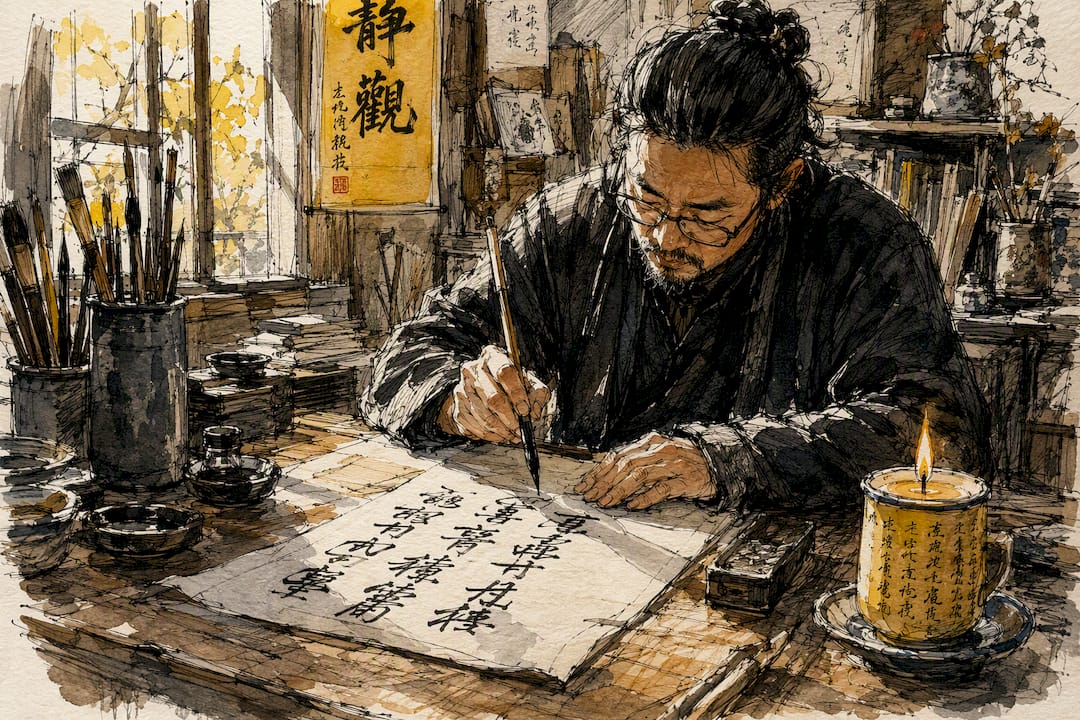
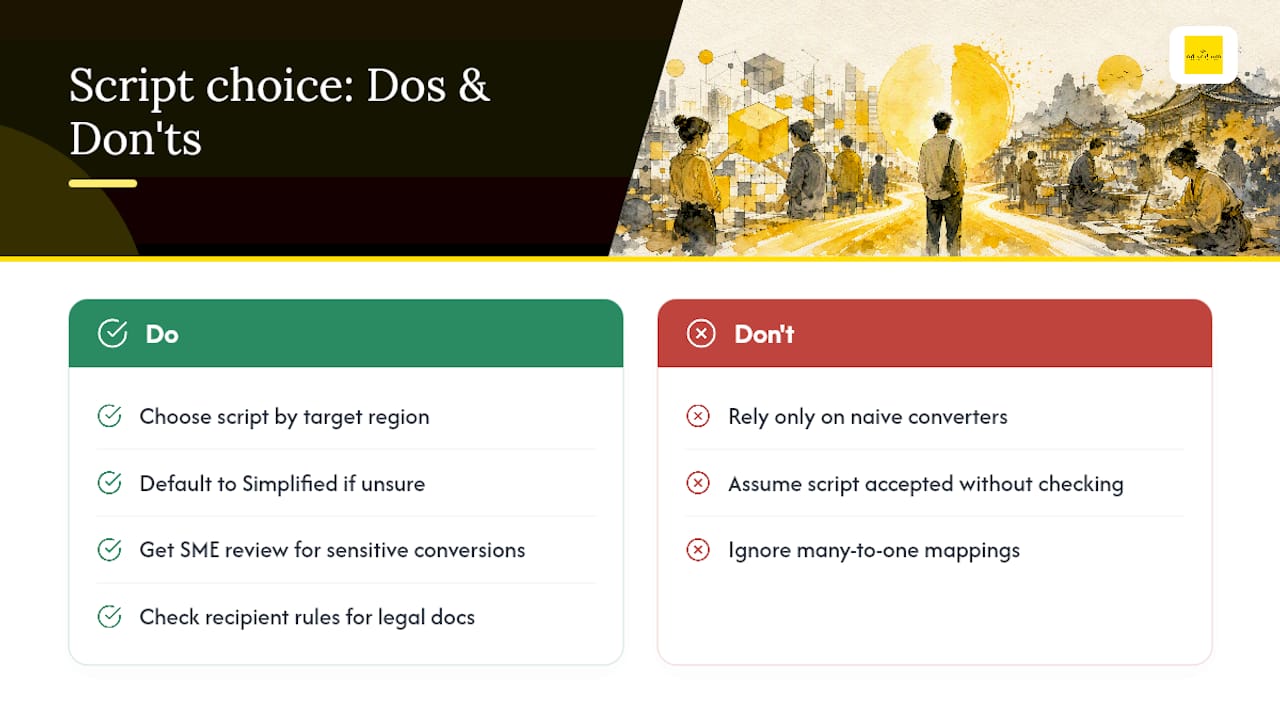
Pick Simplified Chinese if your audience is in mainland China, Singapore, or Malaysia. Pick Traditional Chinese if your audience is in Taiwan, Hong Kong, or Macau. This holds for learners choosing a study path and for organizations localizing content, and it is the single most important decision rule in this guide.
If your audience is mixed or unknown, US organizations should default to Simplified for mainland-focused distribution and switch to Traditional when the project targets Taiwan, Hong Kong, or carries cultural weight where orthodox characters signal authenticity. The PRC’s List of Commonly Used Standard Chinese Characters governs mainland usage, Unicode’s Unihan database handles the technical encoding underneath both scripts, and exam standards like HSK (mainland) and TOCFL (Taiwan) tell you exactly which script an institution expects.
Learning: Choose based on the region tied to your goals, exam, or media diet.
Localizing: Match the receiving market’s legal or regulatory default, not the easier conversion path.
Uncertain cases: Consult a linguist or localization partner before shipping either script into a regulated or brand-sensitive project.
Key Takeaways
Script choice for Chinese-language projects should follow the audience’s regulatory region first, and every automated conversion needs human review for many-to-one character mergers.
Point | Details |
Match script to region | Simplified for mainland China, Singapore, and Malaysia; Traditional for Taiwan, Hong Kong, and Macau. |
Watch the mergers list | A small set of many-to-one mappings like 发/發/髮 causes most conversion errors in names and legal terms. |
Treat regulated content differently | Legal, medical, and manufacturing documents may make script choice a compliance requirement, not a preference. |
Test across devices | Unicode’s Han unification means the same character can render differently by locale and font, so QA across platforms is required. |
Engage AD VERBUM for high-stakes projects | AD VERBUM’s AI+HUMAN hybrid translation with ISO 17100 and ISO 18587 aligned QA targets merger errors in regulated Chinese localization. |
Table of Contents
What Is the Difference Between Simplified and Traditional Chinese?
How Do the Two Scripts Actually Differ Character by Character?
What Technical Pitfalls Trip Up Chinese Localization Projects?
Why This Decision Deserves More Rigor Than Most Teams Give It
How AD VERBUM Supports Regulated Chinese Localization Projects
What Is the Difference Between Simplified and Traditional Chinese?
Simplified Chinese is the modern, reduced-stroke character set standardized by the PRC in the 20th century and adopted as the official script in mainland China, Singapore, and Malaysia. Traditional Chinese is the older, historically continuous character set still used officially in Taiwan, Hong Kong, and Macau, and it remains common in older diaspora communities across the United States.
For US-based projects, this regional split matters more than most people assume. A Chinese-language product page aimed at mainland buyers needs Simplified; the same page aimed at a Taiwanese distributor or a Hong Kong investor relations audience needs Traditional. Government forms, HSK testing materials, and mainland legal filings use Simplified exclusively. TOCFL exams, Taiwanese court documents, and Hong Kong statutory notices require Traditional. Diaspora audiences in US cities split along these same lines depending on family origin.
Region | Official Script | Common US Touchpoint |
Mainland China | Simplified | E-commerce, mainland investor materials |
Singapore, Malaysia | Simplified | Southeast Asia trade documentation |
Taiwan | Traditional | Tech supply chain, TOCFL-linked education |
Hong Kong, Macau | Traditional | Finance, legal filings |
The PRC’s official mapping tool for this split is the Table of Comparison between Standard, Traditional and Variant Chinese Characters, published as an attachment to the 2013 List of Commonly Used Standard Chinese Characters.
How Do the Two Scripts Actually Differ Character by Character?
The Table of Comparison maps 3,120 standard characters to 2,574 traditional counterparts across 2,546 standard characters, and the gap between those numbers is the entire source of conversion risk in this field. Simplification followed a few repeatable strategies rather than random reduction.
Radical and component substitution replaced complex recurring elements with simpler stand-ins: 言 became 讠, 金 became 钅, 糸 became 纟. Cursive-derived simplification adopted handwritten shorthand forms as the new standard, and outright stroke reduction cut components from characters that carried no phonetic or semantic loss. A few examples make the pattern concrete:
見 → 见 (see)
語 → 语 (language)
開 → 开 (open)
車 → 车 (vehicle)
東 → 东 (east)
買 → 买 (buy)
Those are clean one-to-one swaps. The real danger sits in many-to-one mergers, where multiple distinct traditional characters collapse into a single simplified form. 發 (to emit, to prosper) and 髮 (hair) both became 发. 後 (after, behind) and 后 (queen, empress) both became 后. 麵 (noodles) and 面 (face, surface) both became 面. A character-for-character conversion tool has no way to know which original meaning a given 发, 后, or 面 was supposed to carry, and this is exactly why naive automated conversion breaks down on names, legal terms, and menus without word-level context.
Stroke count differences also affect legibility and typography at small sizes. Traditional characters average more strokes per glyph, which matters for signage, packaging, and UI elements rendered below 12 point.
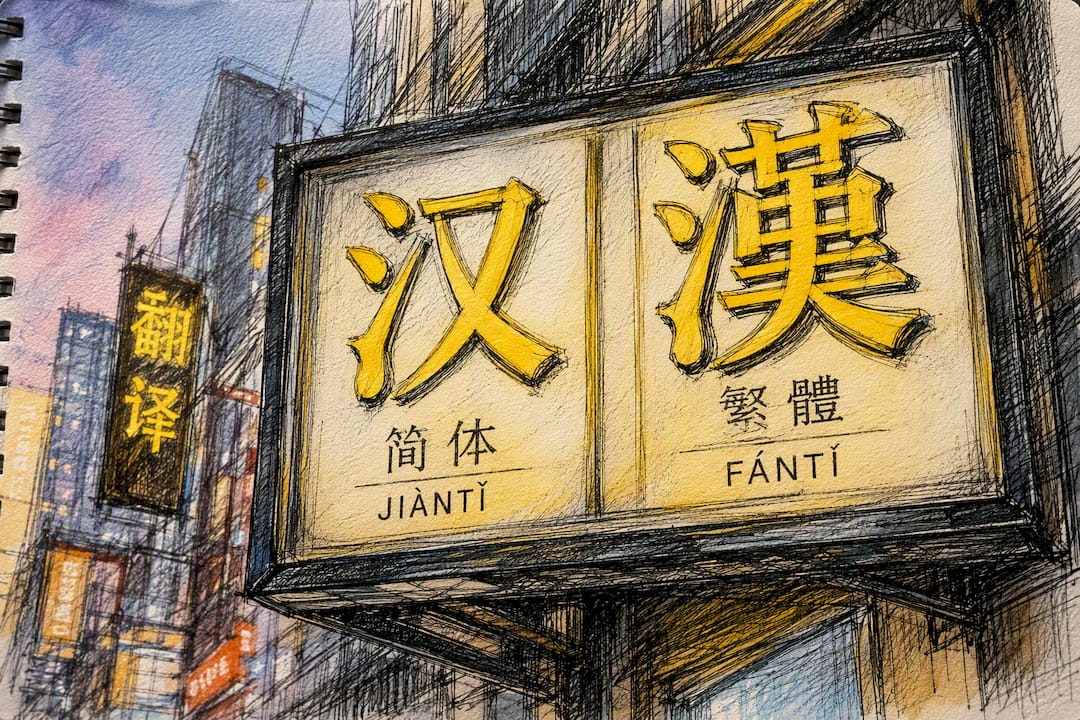
Pro Tip: Build a “mergers list” of every many-to-one character your content actually uses, and route every instance through subject-matter-expert review rather than trusting a stroke-mapping table alone.
How Should Organizations Decide Which Script to Use?
Work through these five steps before committing a project to either script.
Identify the primary audience’s location and touchpoints. A mainland distributor, a Taiwanese investor, and a Hong Kong regulator each expect a different script, and guessing wrong reads as careless at best.
Classify the content type. Legal and regulatory filings, marketing copy, product UI, and educational material carry different risk levels if the script is wrong; a mistranslated menu is embarrassing, a mismatched legal filing can be rejected outright.
Check mandatory standards or exam requirements. Mainland institutions and the HSK exam require Simplified; Taiwan’s TOCFL and Hong Kong statutory bodies require Traditional. Regulated documents often make script choice a compliance requirement rather than a preference, and a filing submitted in the wrong script risks rejection or contractual ambiguity.
Decide between converting existing assets or building native localized content. Conversion is faster; native creation avoids merger errors entirely for high-stakes documents.
Plan QA and SME review specifically for ambiguous mappings, before delivery, not after a client flags an error.
When selecting a vendor, confirm certifications like ISO 17100 and ISO 18587, ask how they govern terminology, and check how they handle proper names and trademarks, which frequently break automated conversion. Input method also matters operationally: mainland teams typically use Pinyin, while Taiwanese teams often use Zhuyin, which affects how content gets drafted and reviewed internally.
Pro Tip: If you’re a US buyer with any regulatory exposure, confirm directly with local counsel or the receiving authority whether a script is mandated. Don’t infer it from a competitor’s website or a generic style guide.
What Technical Pitfalls Trip Up Chinese Localization Projects?
Unicode’s Han unification maps CJK ideographs into shared code points, meaning the same character can render differently depending on device locale, installed fonts, and rendering engine. Test every deliverable across the actual devices and platforms your audience uses, not just your development environment.
Automated conversion tools remain the most common source of quiet errors. A tool that maps characters one-to-one without word-level context will mishandle every merger case, corrupt proper names, and mistranslate legal terminology that depends on the specific traditional form. Pinyin-based search behaves differently from Zhuyin-based input, and that difference changes keyword matching, discoverability, and multilingual SEO performance in ways a simple find-and-replace won’t catch.
A working QA checklist for any Chinese-script delivery should include:
Lock the glossary and termbase before translation begins.
Run a bilingual pseudo-review pass on the converted or translated draft.
Route every character on your mergers list to SME validation.
Check layout and truncation on UI strings, since Traditional characters often run longer.
Confirm acceptance criteria explicitly for any regulated or legal document.
Pro Tip: Preserve your original-language translation memory and termbase as the source of truth, and treat every many-to-one mapping and every proper name as a mandatory human-review item, no exceptions.
Two Failure Modes Worth Knowing
A product manual translated from English into Simplified Chinese, then auto-converted into Traditional for a Taiwanese distributor, can silently swap 发 (emit/prosper) for 髮 (hair) in a technical clause. Word-level conversion tools with glossary integration, followed by SME sign-off, catch this before it ships.
A learner who studies only Simplified for two years will often struggle to read Traditional-language menus, subtitles, or a family member’s handwriting. The fix isn’t relearning from scratch: a focused spaced-repetition deck built around the merger list, plus regular reading practice in the second script, closes most of that gap within weeks rather than months.
Integrate TM and termbase assets before translation starts.
Schedule SME review specifically on ambiguous, merger-prone terms.
Budget a short, targeted training block for learners rather than a full curriculum rebuild.
Why This Decision Deserves More Rigor Than Most Teams Give It
Most organizations treat script choice as a formatting toggle. It isn’t. AD VERBUM recommends AI+HUMAN hybrid translation with subject-matter-expert review for any regulated US project touching Chinese script, because the mergers problem doesn’t resolve itself with a better algorithm. It resolves with a linguist who knows which of three traditional characters a single simplified glyph was supposed to mean. AD VERBUM’s workflow runs on a proprietary LangOps System hosted on EU servers and holds ISO 17100 certification specifically to keep that review auditable.
How AD VERBUM Supports Regulated Chinese Localization Projects
Most localization vendors hand you a converted file and call it done. AD VERBUM runs a different sequence: discovery to confirm the required script and audience, terminology governance with your existing Translation Memories and Term Bases imported first, AI+HUMAN hybrid translation with certified subject-matter-expert review on every merger-prone term, then QA aligned to ISO 17100 and ISO 18587 before delivery.
That sequence matters most when the stakes are high: legal filings destined for Taiwan or Hong Kong courts, medical device documentation under MDR alignment, technical manuals with proprietary terminology, or a large content migration where a single merger error multiplies across thousands of strings. Procurement and compliance teams evaluating vendors should ask for ISO 17100, ISO 18587, and ISO 27001 certification and confirm where the underlying infrastructure is hosted. AD VERBUM’s LangOps System runs on EU servers with no reliance on outsourced public cloud tooling for core processing, which matters for data sovereignty in regulated engagements.
If your project involves legal filings, technical manuals, or medical documentation, start with AD VERBUM’s localization service to scope terminology governance, or go directly to certified translation if the deliverable is a legal or regulatory document with a hard deadline.
Frequently Asked Questions
Is Simplified or Traditional Chinese more widely used? Simplified Chinese has more total speakers because it’s the official script of mainland China, the world’s largest Chinese-speaking population, plus Singapore and Malaysia. Traditional Chinese remains official in Taiwan, Hong Kong, and Macau and stays common across older diaspora communities in the US.
Can I convert Simplified text to Traditional automatically? Character-mapping tools handle most one-to-one conversions correctly, but many-to-one mergers like 发/發/髮 require word-level context that naive tools miss. Any conversion destined for legal, medical, or brand-sensitive use needs subject-matter-expert review, not just an automated pass.
Which script should I learn first? Base it on your goal region: mainland-focused study or the HSK exam points to Simplified; Taiwan-focused study or TOCFL points to Traditional. Without a specific target, Simplified is the practical default given broader material availability, though reading fluency in the other script comes relatively fast once you know one set well.
Does script choice affect legal document acceptance in the US? US courts and agencies generally accept certified translations in either script, but the underlying foreign document or its intended recipient jurisdiction may require a specific script. Confirm directly with the receiving authority or legal document translation guidance before submission.
Sources
The Table of Comparison between Standard, Traditional and Variant Chinese Characters is the PRC’s authoritative character-mapping standard. The Simplified Chinese Characters overview covers regional adoption history. FluentU’s comparison guide explains simplification patterns with examples. Literate Chinese’s learner guide covers exam-based script selection. Hanzi.unihan’s JianFanYi tables support precise character-level lookup for QA teams. Tofu.tools explains Han unification and cross-device rendering. For legal-document script requirements in cross-border matters, see cross-border estate dispute guidance.
Recommended


